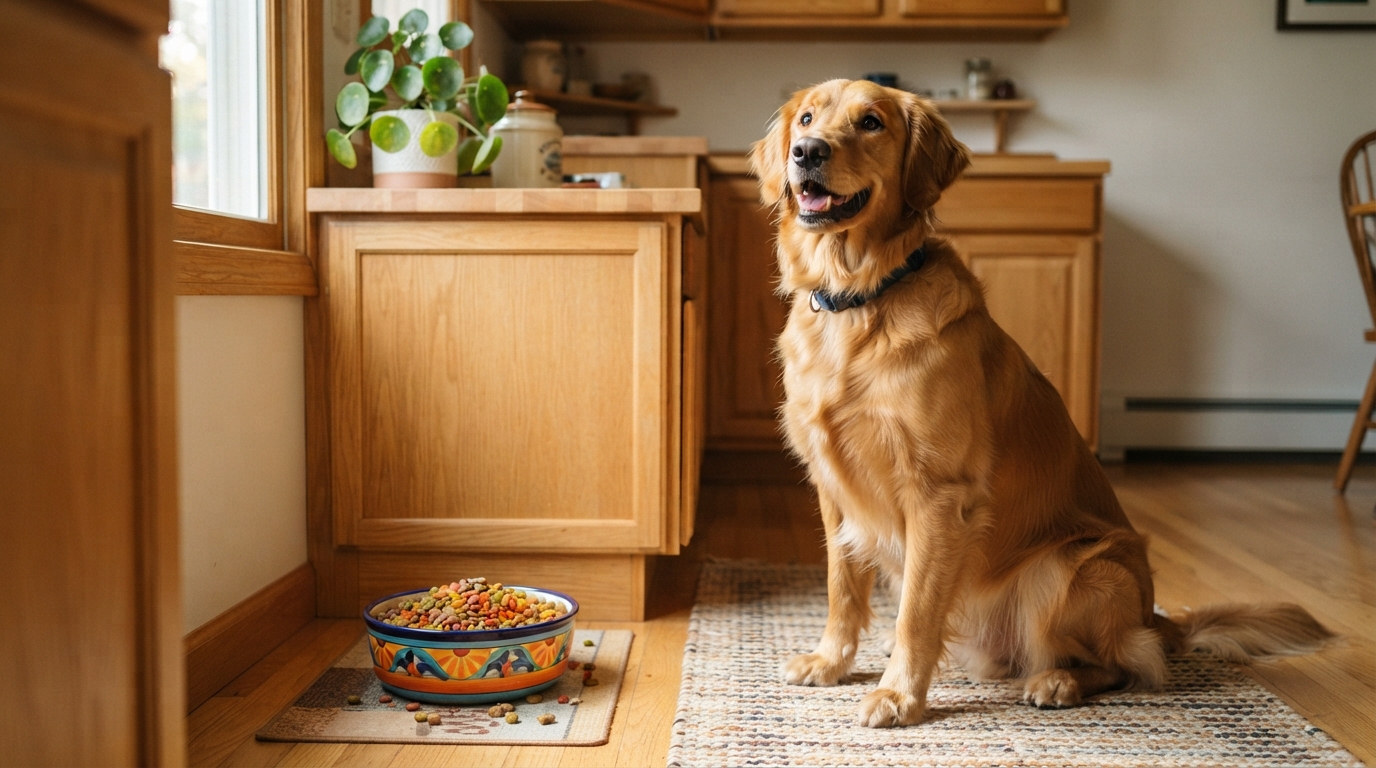
A dog can gain weight gradually enough that small changes in meals and activity are easy to miss. Small shifts can affect comfort and health over time, even when a pet still seems lively. A body condition score, or BCS, is a score based on a dog’s shape and the amount of fat over its body, assessed by looking and feeling rather than relying on weight alone.
Steady daily habits help us notice changes and respond in a measured way. We can use practical feeding, activity, and check-in habits instead of chasing a breed’s number on a scale. The goal is a routine that fits the dog’s needs and can keep working through the ordinary changes of life.
Key Takeaways
- Look at body shape and feel, not weight alone.
- Use breed ranges as background, not personal goals.
- Count treats and extras as part of the daily food plan.
- Build activity at a pace the dog can manage.
- Track changes and ask for veterinary help when needed.
We can begin with a consistent routine and adjust it using the dog’s body condition, not appearance alone.
How Can We Tell Whether a Dog Is at an Ideal Weight?
A dog’s shape and feel give us more useful clues about body condition than a number on the scale by itself. An adult dog near ideal condition often falls around 4-5/9, though the score must name its scale.
On the 9-point scale, an adult dog around 4-5/9 is generally in the ideal range. That scale separates more levels of condition than the 5-point scale, so a score without its scale can mislead.
Check ribs, waist, and abdominal tuck together
Use three simple checks at home, since each shows a different part of the dog’s body condition:
- Feel the ribs beneath the coat.
- View the waist from above.
- View the abdominal tuck from the side.
For an adult dog around 4-5/9, the ribs are easy to feel beneath minimal to slight fat cover. A visible waist sits behind the ribs, and the belly rises into an abdominal tuck.
Feeling matters because a thick coat can hide the outline. A dog may also look lean while carrying more fat than expected, or look broad because of muscle and frame.
If our home estimate falls outside 4-5/9, or we cannot judge the score with confidence, get a veterinary assessment before substantial feeding, calorie, or activity changes.
Use breed charts as context, not a target
A dog ideal weight calculator by breed and a dog weight chart in kg can give a broad reference. Neither can show an individual dog’s body fat, since frame size and muscle also affect weight.
Breed weight ranges are general references, not personal ideal body weight targets. Owners also tend to give lower BCS scores than veterinary assessors, especially when a dog is above ideal.
A medium-sized dog weight in kg will vary with its frame and build, so the same number may not suit every dog. Hill’s describes dogs around 30 pounds (14 kg) or less as generally small, dogs over 55 pounds (25 kg) as usually large, and dogs between those descriptions as medium.
Those size labels describe broad groups, not body condition. We should read a chart alongside the dog’s shape, feel, and veterinary assessment rather than treating a breed average as a personal goal.
How Should We Set Daily Food and Treat Portions?
A calorie calculator can help us start portion planning, but the dog’s condition and weight trend determine whether that amount is appropriate. It gives an estimate, not a prescription, and a veterinary team can tailor the plan.
Keep a measured portion that supports healthy body condition, even when it differs from a calculator’s estimate. Needs can vary with age, activity, health, muscle condition, and current intake.
Use calorie tools as starting points
The APOP maintenance calculator is for apparently healthy, fully grown adult dogs at ideal body condition confirmed by a veterinary team. It offers a starting estimate, not a diagnosis or an individual weight-loss plan.
The Pet Nutrition Alliance calculator is designed for veterinary professionals. A veterinary team can use weight trends, body and muscle condition, age, activity, health, and current intake to set calories and recheck times.
A dog ideal weight calculator or dog weight calculator cannot replace that individual assessment. The average weight of a dog in kg changes with adult size, so frame and body condition matter more than a population average when setting food intake.
For professional calorie planning, the Pet Nutrition Alliance tool lowers suggested food by 10% when a 10% treat allowance is included. The tool is intended for veterinary professionals, especially when a dog has obesity at BCS 7/9 or higher.
Measure the whole day’s food and extras
Use the food package’s calorie information to work out a portion. Weighing food gives a more precise portion than measuring by cup, and a new food or meal plan calls for a fresh calculation.
Treats and extras should make up no more than 10% of daily calories. Choosing 5% leaves more calories for the main food, while chews, scraps, and other extras still count.
Our portion control strategies can help us keep the daily amount clear. If treats or extras take more of the calorie allowance, reduce the main-food portion to match the plan.
| Situation | Tool or rule | Practical amount | What to do |
|---|---|---|---|
| Healthy, fully grown adult at ideal condition | APOP maintenance calculator | Starting estimate only | Keep a different measured amount if condition stays healthy |
| Professional calorie planning | Pet Nutrition Alliance calculator | Designed for veterinary professionals | Use veterinary-team oversight, especially at BCS 7/9 or higher |
| Daily treats and extras | Calorie allowance | No more than 10%, with 5% as an option | Recalculate the main-food portion when the plan changes |
Package calorie information can change when we choose a different recipe, even if the portion looks the same. Recalculate the portion whenever the food’s calorie content or the daily extras change.
How Can We Support Healthy Weight Maintenance for Dogs?
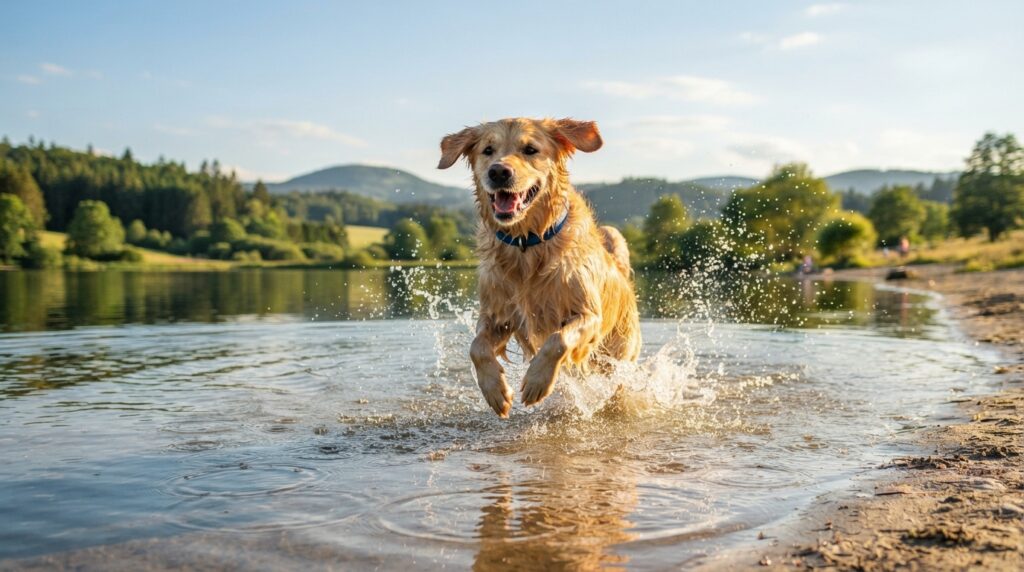
A dog that has been inactive should build fitness gradually rather than jumping into a demanding exercise routine. Low-impact activity can support mobility and help maintain muscle, without a sudden jump in effort.
Increase exercise in small steps to help an inactive dog avoid injury. Walking or swimming can provide lower-impact movement, with the pace and distance matched to the dog’s ability.
Build activity gradually
Start with a level the dog can handle comfortably, then add time or effort in small amounts. A dog with sore joints, low stamina, or a health concern may need a different starting point.
Watch how the dog moves during and after activity. If the dog struggles to keep pace or seems uncomfortable, reduce the effort and ask the veterinary team about a safe activity level.
Make movement part of the routine
Daily activity works best when it fits the dog’s lifestyle and ability. At least 30 minutes per day is a general recommendation, not a prescription for every dog.
We can make movement easier to sustain by choosing activities that suit the dog’s age, health, and energy. Options include:
- Walking
- Swimming
- Interactive play
- Short training or enrichment sessions
A regular time can help make activity part of the day, while shorter sessions can suit dogs that tire quickly. We can also adjust the plan as the dog’s fitness or health changes.
Activity is only one part of weight care, but it can add useful movement without forcing a dog into a hard routine. Choose activity the dog can do comfortably and increase it only as their fitness allows.
How Do We Track Changes and Respond to Weight Gain?
A single weigh-in matters less than a consistent record of how weight and body condition change over time. A steady record can show a slow shift that one reading may hide.
For a dog that appears to be at ideal condition, check weight and body condition monthly. A dog body weight chart can help us record the trend, but it cannot replace a body-condition check.

Watch trends in weight and body condition
Record the date and weight each time, then note whether the dog’s condition seems stable or changed. Use similar conditions for each weigh-in so the readings are easier to compare.
A healthy weight for dogs is individual, not a single number on a breed chart. A dog’s frame and muscle can make a breed average a poor fit, even when the dog shares that breed.
Weight gain can happen in small steps, so a record helps us spot a pattern before it becomes harder to address. If the trend moves away from the dog’s usual condition, we can bring those notes to the veterinary team.
Get veterinary support for weight loss
A dog with excess weight needs a veterinary-guided plan, especially with obesity at BCS 7/9 or higher. The Pet Nutrition Alliance recommends direct veterinary-team oversight at that score.
During a weight-loss plan, weigh the dog at least every two weeks. The expected safe weight-loss rate is 1-2% of body weight per week, and the veterinary team can review progress against that range.
Weight loss should stay near 1-2% of body weight per week during a plan; faster loss needs a veterinary-team review.
Obesity in dogs is linked with heart disease, diabetes, arthritis, high blood pressure, and anesthetic complications. Extra weight can worsen arthritis by adding stress to bones, joints, and muscles.
A veterinarian can help set a suitable goal based on the dog’s health and track how the plan affects body and muscle condition. If a dog’s loss is faster than 1-2% per week or progress raises concern, contact the veterinary team to review the plan.
Conclusion
A steady routine is easier to maintain than a series of drastic changes. One manageable choice, such as keeping feeding times consistent or making room for daily movement, can support a pet’s health over time.
We do not need to change every habit at once. If the dog’s condition is uncertain or changing, a veterinary check can help us choose a safe goal and avoid guesswork.
We can start by recording the dog’s current body condition and asking the veterinary team to confirm a suitable goal.