
A serious injury or illness can turn an ordinary vet visit into a major expense, so a dog policy should be judged by what it will reimburse, not only by its monthly price. A 2024-2025 Consumer Reports survey found that two-thirds of policyholders thought their pet insurance was worth the cost. That does not mean every plan pays every bill.
For pet owners, the reimbursement rate, annual limit, and exclusions can matter as much as monthly premiums. We compare costs, coverage, and claims so you can weigh protection against the vet bills you could face. Policy terms vary by state and plan, even when two plans share a name.
The most useful first step is to compare the coverage you can afford with the care you would want your dog to receive.
Key Takeaways
- Compare the deductible, reimbursement rate, and annual limit together.
- Check exclusions and waiting periods before focusing on price.
- Routine care often needs an optional wellness plan.
- Provider features and policy terms can vary by state.
- Request quotes using the same dog and coverage settings.
What Does Pet Insurance Cover for Dogs?
Most dog policies focus on eligible treatment for accidents and illnesses, while routine care usually requires a separate wellness option. A reimbursement rate is the percentage of eligible veterinary expenses the insurer pays after applying the deductible, subject to the policy’s limits and exclusions.
Accident-and-illness coverage helps pay eligible costs for unexpected health problems, not every visit or service. The policy’s annual limit sets the maximum reimbursement during its policy year. A pre-existing condition is a condition with signs or evidence before coverage begins.
Accident-and-illness coverage pays only for eligible treatment, after the deductible and within the policy’s limits and exclusions.
Accident-and-illness coverage
When a dog swallows a toy, breaks a bone, or develops an illness, eligible care may include diagnostic tests, hospitalization, surgery, and medication. Pet health insurance can help with these costs, but each policy defines covered care and exclusions in its own terms.
Before choosing among pet insurance policies, check whether the plan includes treatment linked to a covered condition. Some plans also treat exam fees as a separate benefit or add-on. Coverage for dogs and cats can differ within the same company, so compare the dog policy itself.
Accident-only and wellness options
Accident-only coverage focuses on injuries, such as cuts or broken bones. It does not replace illness coverage. Routine preventive care, such as vaccines or annual checkups, is often offered through an optional wellness plan rather than standard accident-and-illness coverage.
Wellness coverage may help with set preventive benefits, but it is not a substitute for coverage of an unexpected illness. Check whether examination fees are included or treated as an add-on before comparing two plans with similar accident-and-illness coverage.
How to Choose the Best Pet Insurance for Dogs
The best fit is the policy whose deductible, reimbursement rate, and annual limit match the costs a household could manage out of pocket. A higher deductible can lower monthly premiums, but it also raises the amount you pay before reimbursement begins.
Compare all three policy settings, not just the reimbursement rate. A high rate cannot make an excluded treatment eligible, and the annual limit can cap payment even when a condition is covered.
Set the deductible and reimbursement rate
The deductible is the amount you pay before reimbursement begins. A larger deductible may make a policy cost less each month, but you need to cover more of an early claim yourself. The reimbursement rate then sets the insurer’s share of eligible expenses after the deductible.
For example, a plan with a lower reimbursement rate leaves you with a larger share of each eligible bill. Think about the cash you could use during a sudden emergency, not only the premium you can pay in a typical month.
Choose an annual limit that fits your risk
An annual limit is the maximum reimbursement during a 12-month policy period. It resets each policy year. A low limit may run out during costly treatment, while unlimited annual coverage removes that reimbursement cap for eligible costs.
Unlimited coverage does not make excluded services eligible or remove the deductible. Use this short checklist when you compare insurance policies:
- Deductible and the amount you could pay first
- Reimbursement rate after the deductible
- Annual limit for each policy year
- Covered services and treatment types
- Exclusions that could affect your dog
Compare the annual limit alongside the deductible, since a generous reimbursement rate cannot pay beyond that limit.
Which Providers Suit Different Dog Owners?
For a broad starting shortlist, compare Spot’s limit choices, Lemonade’s accident wait, Pets Best’s coverage options, Nationwide’s plan structure, and Trupanion’s unlimited covered payouts. Consumer Reports rated 14 providers, but its survey did not name one clear fit for every dog.
The nationally representative survey included 3,583 policyholders. It assessed satisfaction with price, coverage choices, reimbursement, and coverage based on pre-existing conditions and a pet’s age. All but one provider received a midrange Overall Satisfaction Score; one received an unfavorable rating.
| Provider | Useful distinction | Concrete plan feature | Fit to investigate |
|---|---|---|---|
| Spot | Extensive customization | Annual limits from $2,500 to unlimited | Owners seeking limit choices |
| Lemonade | Value-focused option | 0-day accident waiting period | Owners comparing wait rules |
| Pets Best | Budget-focused option | $2,500 to unlimited annual coverage | Owners seeking flexible limits |
| Nationwide | Plan categories and virtual care | Sample plan has $5,000 limits per category | Owners comparing plan structure |
| Trupanion | Unlimited covered payouts | No payout cap on covered costs | Owners focused on covered expenses |
For a pet insurance review, look past an overall label and read the actual policy terms and exclusions. Satisfaction can reflect price or service as well as coverage, so it does not guarantee a claim outcome.
Use the shortlist to narrow quotes, then verify that the exact policy is available in your state.
What Does Spot Pet Insurance Offer?
Spot offers a wide range of annual limits and deductibles, including an unlimited limit and a $100 deductible option. Owners can choose $2,500, $3,000, $4,000, $5,000, $7,000, $10,000, or unlimited annual coverage.
Annual deductible options range from $100 to $1,000, with reimbursement choices of 70%, 80%, or 90%. Spot defines the annual limit as the most it will reimburse in a 12-month period after the deductible is met; the limit resets each policy year.
Spot says its plans have no lifetime caps, upper age limit, network restrictions, or vet exam requirement for enrollment. A wide choice of settings can help owners adjust the policy to their budget and risk. No network restriction, though, does not remove exclusions from the insurance policy.
Unlimited annual coverage is a limit option, not a promise that every veterinary expense qualifies. The plan still applies its terms, deductible, and exclusions. Prescription foods and supplements qualify only when prescribed to treat an eligible accident or illness.
Food for weight management or general health maintenance does not qualify under that rule. Check the prescription-food rule and other exclusions in the policy before treating an unlimited limit as unlimited coverage for every bill.
Is Lemonade Pet Insurance a Fit for Your Dog?
Lemonade’s accident wait is 0 days, but illness and orthopedic coverage have separate waiting periods. The listed waits are 14 days for illness and 30 days for orthopedic conditions.
Lemonade offers reimbursement choices of 70%, 80%, and 90%. A 0-day accident waiting period does not cover a condition that was already present before coverage began. Pre-existing conditions are not covered under its general rule.
Lemonade says temporary pre-existing conditions or injuries may qualify for coverage in most states after they resolve. The pet must have no recurrent symptoms or continued treatment for at least 12 months.
That exception does not apply to chronic conditions or knee and ligament problems. The policy’s waiting period, state rules, and condition definitions all matter when assessing a claim.
Check the policy’s state-specific terms before relying on the curable-condition exception.
What Does Nationwide Pet Insurance Cover?
Nationwide’s sample modular plan pairs a $5,000 limit per category with 80% reimbursement and a $250 annual deductible. The sample includes Accident and Illness coverage, with optional Congenital & Hereditary and Cruciate riders.
The Cruciate rider is added after the first year. Nationwide allows policyholders to use any licensed veterinarian in the United States and provides unlimited 24/7 virtual pet care through the VetHelpline app.
Nationwide plans can cover accidents, illnesses, wellness and preventive care, emergency care, and surgical procedures. Pre-existing conditions are excluded. The sample plan is one example, not a promise that every policy has those settings.
Access to any licensed US veterinarian and virtual care describe ways to seek help. They do not decide whether a particular expense is eligible under the policy. The payment terms still govern the claim.
Match the sample plan to the policy offered in your state, since actual terms can vary.
How Does Trupanion Pet Insurance Work?
Trupanion’s unlimited payouts apply to covered costs, while direct payment depends on whether the veterinary clinic has its software. Unlimited payouts do not remove the deductible, policy terms, or exclusions.
At clinics with Trupanion’s direct-pay software, payment may go from the insurer to the clinic. That differs from a standard reimbursement claim, where the owner pays first and then files for repayment.
Pre-existing conditions, wellness and preventive care, and exam fees are listed as non-eligible expenses. A covered treatment may still have an ineligible related charge, so check how the policy handles each part of the bill.
State Farm and Trupanion are separate entities. State Farm agents do not file or process Trupanion claims. A familiar insurance brand should not lead you to assume its agents manage another company’s policy.
Ask the clinic whether it can submit a claim directly before assuming you can avoid paying the bill upfront.
What Other Dog Insurance Companies Should You Compare?
Several alternatives stand out for a particular setting, such as Figo’s 100% reimbursement option or MetLife’s shared plan for up to three pets. Compare each feature with the rule or limit attached to it.

Compare options for price and reimbursement
Pets Best offers annual limits of $2,500, $5,000, $10,000, or unlimited. Its deductible options include $50, and its reimbursement choices are 70%, 80%, and 90%. These settings may appeal to owners comparing prices and annual coverage.
| Company | Concrete feature | Relevant condition or limit |
|---|---|---|
| Pets Best | $2,500, $5,000, $10,000, or unlimited annual limit | $50 deductible option; 70%, 80%, or 90% reimbursement |
| Figo | 100% reimbursement option | Six-month orthopedic wait may be waived with a veterinary exam |
| Healthy Paws | Hip-dysplasia coverage rule | 12-month waiting period |
| MetLife | Shared Family Plan | Up to three dogs and cats |
| AKC | Eligible pre-existing-condition coverage | After the policy has been active for 365 days |
Look for specialized coverage needs
Healthy Paws’ 12-month hip-dysplasia waiting period may matter for a dog at risk of that condition. MetLife’s shared plan can cover up to three dogs and cats under one family plan. AKC lists coverage for eligible pre-existing conditions after 365 days of active coverage.
Embrace lists a 180-day orthopedic waiting period, while Pumpkin offers 90% reimbursement and a 14-day wait for accidents and illnesses. ASPCA coverage includes dental illness and alternative therapies. Check its policy terms alongside Spot and Pumpkin rather than assuming the plans match.
Confirm whether a specialized feature applies to your dog’s condition and state before comparing the monthly quote.
How Much Does Dog Insurance Cost?
The available figures range from a $34.50 member median to an approximately $70 monthly average for dogs, but the underlying samples differ. A sample quote for a 10-year-old dog reached $139 per month, the cheapest quote in that sample.
These figures are not interchangeable because they describe different groups and coverage profiles. A Consumer Reports buying guide updated January 28, 2026, reported a median of $34.50 per month per pet among its members.
Understand the premium figures
| Figure | Amount | Scope |
|---|---|---|
| Consumer Reports member median | $34.50 per month per pet | Members’ reported premiums |
| 2026 average dog premium | About $70 per month | Average dog premium |
| Sample quote for a 10-year-old dog | $139 per month | Cheapest quote in that sample |
Young-pet sample quotes included $40 per month for dogs. That is a sample figure, not a promise of the cheapest pet insurance for another dog. Age and coverage can shift quotes sharply.
Compare quotes for the same dog and coverage
Nationwide does not have one monthly price that fits every dog. A quote depends on the dog’s breed, age, location, and selected coverage. Use these five details to compare insurance quotes fairly:
- Dog’s age
- Breed
- ZIP code
- Deductible
- Reimbursement rate
Request quotes for the same dog profile and policy settings so the premium comparison is meaningful.
How Do Waiting Periods and Pre-Existing Conditions Affect Coverage?
Waiting periods run from 2 days to 12 months across policies, and the applicable period depends on the coverage type. A condition that begins before coverage starts or during a waiting period can be treated as pre-existing.
Separate waiting periods by condition
Accident, illness, and orthopedic coverage can have different start dates. Lemonade lists a 0-day accident wait, a 14-day illness wait, and a 30-day orthopedic-condition wait.
| Situation | Waiting period or rule | Practical implication |
|---|---|---|
| General insurer range | 2 days to 12 months | Check the policy’s coverage type |
| Lemonade accident | 0 days | Does not cover pre-existing conditions |
| Lemonade illness | 14 days | Illness coverage starts after the wait |
| Lemonade orthopedic condition | 30 days | Orthopedic coverage has a separate wait |
Understand pre-existing-condition rules
A pre-existing condition is a condition with signs or evidence before coverage begins. Insurers may also treat a condition that starts during a waiting period as pre-existing. Policy definitions and exceptions can vary by state.
Lemonade says temporary conditions or injuries may qualify as curable in most states after at least 12 months without recurring symptoms or continued treatment. Chronic conditions and knee or ligament problems do not qualify for that exception.
Prepare medical records before filing
Lemonade requires records covering the pet’s last 12 and a half months to assess pre-existing conditions and reimburse claims. For a pet under one year old, records should cover birth through the illness waiting period.
Keep veterinary records available and confirm the policy’s definition of a curable condition before enrolling.
How Do Reimbursement and Claim Denials Work?
In the latest-claim survey, 44% received full reimbursement at their policy level, while 25% received less than they had hoped for. Reimbursement may differ from expectations because of the deductible, eligible-expense rules, copay, and policy limit.
What policyholders received on recent claims
Consumer Reports asked policyholders about their most recent claim in the past 12 months. Full reimbursement at the policy level means the insurer paid the covered share after the plan’s copay, not that it paid the entire bill.
Common reasons claims are denied
Industry benchmarks place 30%-40% of denials on pre-existing conditions, 15%-20% on waiting-period violations, and 15%-20% on uncovered conditions. Documentation issues and policy exclusions each account for a separate 10%-15% range.
| Claim outcome or denial reason | Percentage | Context |
|---|---|---|
| Full reimbursement at policy level | 44% | Most recent claim in past 12 months |
| Less reimbursement than hoped | 25% | Policyholders’ reported claim outcome |
| Pre-existing conditions | 30%-40% | Industry denial benchmark share |
| Waiting-period violations | 15%-20% | Industry denial benchmark share |
| Uncovered conditions | 15%-20% | Industry denial benchmark share |
After a denial, check these five details before deciding how to respond:
- Explanation of benefits
- Medical records used to review the claim
- Itemized veterinary invoice
- Waiting-period dates
- Appeal deadline
What denial rates can and cannot tell you
A 2026 benchmark puts comprehensive-plan denial rates at 12%-18%. That range does not rank named insurance companies. Rates below 8% may point to weak underwriting controls, while rates above 22% can invite regulatory risk.
Denial rates above 20%-25% can draw state insurance department attention. Regulators also consider complaint ratios, denial reasons, rate spikes, and appeal overturn rates, not one percentage alone.
Compare the denial reason with the policy wording and submit any appeal before its stated deadline.
Should You Add Wellness Coverage to an Accident-and-Illness Plan?
A wellness add-on is most useful when its listed benefits match care the dog is likely to receive. Compare the expected cost of preventive services with the add-on’s price and reimbursement terms.
Match preventive benefits to expected care
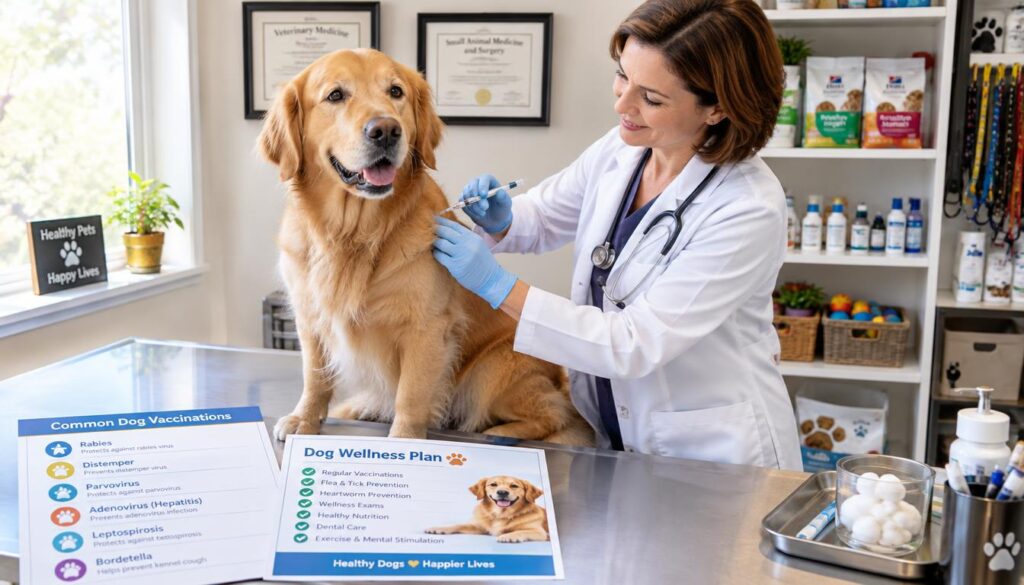
Preventive services can include checkups, vaccines, flea and tick prevention, dental cleanings, and microchipping. Lemonade offers wellness-plan tiers as optional coverage. Review the benefit schedule to see which services qualify and how much the plan pays.
List the care your dog is likely to receive, then compare those expected costs with the add-on’s price. A wellness plan does not automatically save money if its benefits do not match your dog’s needs or timing.
Check dental coverage by treatment type
Pet insurance may cover dental work when the policy includes the relevant eligible treatment. Routine dental cleaning and dental illness are not interchangeable benefits. ASPCA lists dental illness and alternative therapies among covered options, subject to policy terms.
Check vaccines, checkups, and dental cleanings as separate items in the benefit schedule. Also look for whether the plan treats illness, injury, and routine care as different kinds of dental coverage.
Check whether the policy covers dental illness, dental accidents, and routine cleaning as separate benefit categories.
Which Exclusions Can Leave You Paying the Vet Bill?
A policy can cover treatment for an eligible illness and still exclude related charges such as an exam fee or nonmedical expense. Read exclusions alongside the covered-service list, since one visit can include both eligible and ineligible charges.
Check pre-existing and waiting-period exclusions
A condition that began before coverage or during a waiting period may be excluded as pre-existing. Spot does not cover pre-existing conditions. The policy’s definition and medical records can affect how the insurer reviews a claim.
Read limits on specific expenses
Prescription food or supplements may qualify when prescribed to treat an eligible accident or illness. Spot does not cover them for weight management or general health maintenance. That distinction matters when a veterinarian recommends a diet for a broader health goal.
Nationwide lists waste disposal, boarding or grooming, and tax among exclusions. Trupanion lists exam fees, wellness and preventive care, and pre-existing conditions as non-eligible expenses.
A policy can exclude an exam fee even when it covers treatment for the illness found during that exam. Check each billed item, not only the diagnosis.
Read the exclusions and benefit schedule together, then ask the insurer about any expense your veterinarian expects to bill.
Is Pet Insurance Worth It for Your Dog?
Policyholders’ experiences differ: 34% said they saved more than they spent, while 40% spent more than they saved. Another 20% broke even, and 6% were unsure.
Two-thirds of policyholders thought their pet insurance was worth the cost. Perceived value and money saved are different measures: a person may value help with a large bill even after paying more in premiums and deductibles.
Insurance shifts some financial risk in exchange for premiums and possible out-of-pocket costs. Setting money aside can offer more control, but a large bill may arrive before savings build up. Neither choice suits every household.
Think about the life expenses you already manage and how much room your budget has for sudden veterinary care. The right choice depends on whether you can pay for an emergency without relying on a claim.
Judge value by whether you could handle a large unexpected bill without delaying care you want your dog to receive.
What Should You Check Before You Enroll?
Before enrolling, verify the actual policy documents and the underwriting company, not just the benefit summary. The full policy sets the rules for coverage, exclusions, and claims.
Read the policy documents and state terms
Check these five items before you choose a policy:
- Read the policy and declarations page.
- Confirm waiting periods and pre-existing-condition wording.
- Verify the reimbursement rate, deductible, and annual limit.
- Ask whether the vet can receive direct payment or claims reimburse you.
- Check complaint information for the underwriting insurer.
The NAIC Consumer Complaint Index compares an insurer’s complaints with its inland marine written premium, the category used for pet insurance policies. It can help compare insurers, but it cannot predict one person’s claims experience.
Compare quotes and plan administration
Check who underwrites the policy and who handles claims. A plan administrator may answer questions or process a cancellation, while another company bears the insurance risk. Keep those roles clear when you contact the company.
For ASPCA cancellation questions, contact the policy administrator. Confirm the effective cancellation date, any refund eligibility, and whether state or policy terms apply. Do not assume the same rule applies to every policy.
Save the declarations page, full policy, and written answers about any coverage question you may need to revisit.
Before enrolling, keep the full policy and written answers to questions that could affect a future claim.
Conclusion
A useful dog policy is one whose limits, exclusions, and monthly cost fit the care you want to be able to provide. The right fit depends on your dog’s needs and your ability to manage the deductible and expenses the policy does not cover.
Request comparable quotes using the same dog details and coverage settings. Choose two or three matching quotes, read each full policy, and confirm the terms for your state before you enroll.