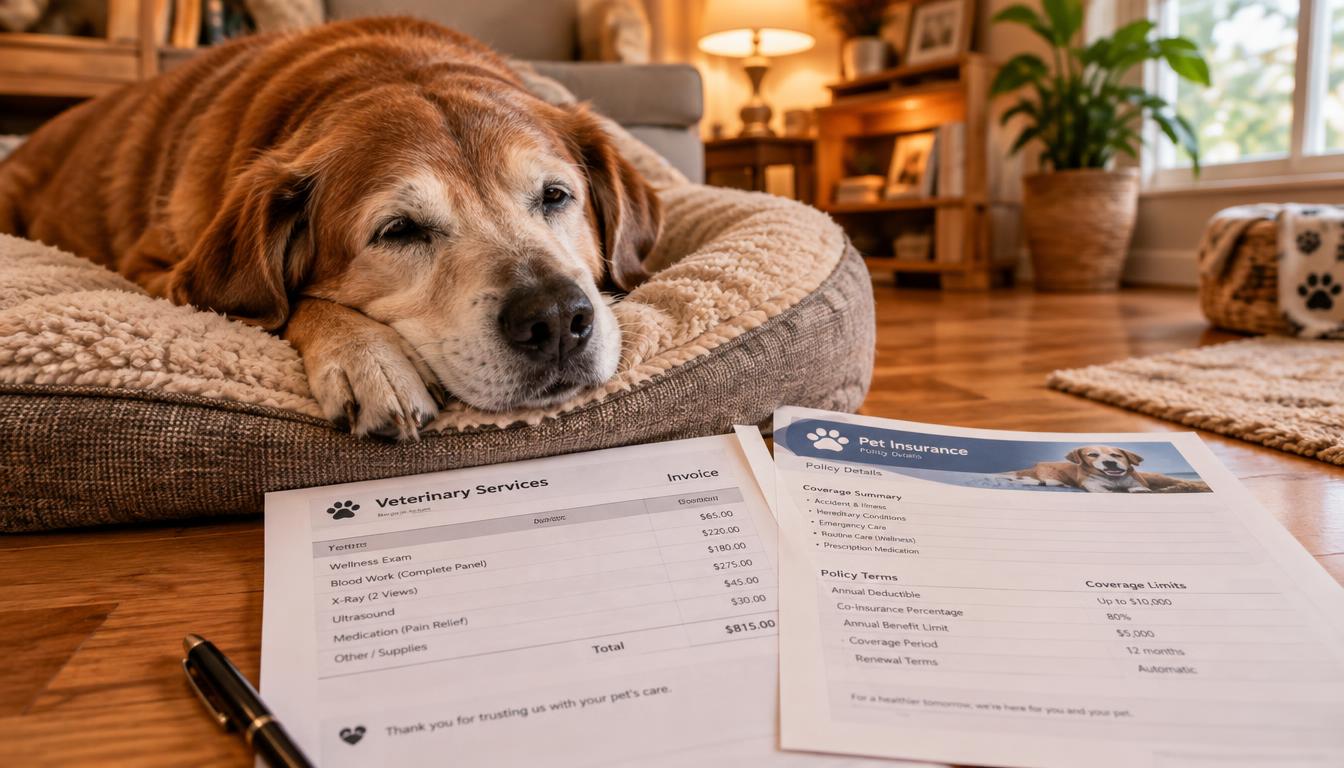
An older dog can often be insured, but a new policy generally will not cover conditions that began before coverage or during a waiting period. Age, health history and plan terms shape the options available, so late enrollment does not guarantee every bill will qualify. The reimbursement rate is the percentage of eligible veterinary expenses a policy reimburses after the deductible, subject to policy limits and exclusions.
We can compare accident-only plans with accident-and-illness coverage, then check how each policy handles the care our dog may need. Insurance may help with eligible costs, but it does not promise payment for every veterinary expense. We will focus on the terms that affect enrollment, bills and care, so we can compare policies with a clearer view of what they may pay.
Key Takeaways
- Some insurers accept older dogs, while others restrict plan choices by age.
- Accident-only and accident-and-illness policies cover different risks.
- A dog’s medical record can affect whether a condition qualifies for coverage.
- Premiums and out-of-pocket costs depend on policy settings and dog details.
- Compare policy documents, not just monthly prices or plan names.
The right comparison starts with the care your dog may need and the bills you could manage yourself.
Can You Insure a Dog at Any Age?
A dog’s age alone does not rule out enrollment, though some providers restrict older dogs to accident-only plans. Age rules vary by company, plan and state, so one insurer may offer illness coverage where another does not. The American Animal Hospital Association (AAHA) considers a dog senior during the last 25% of its estimated lifespan.
Senior status is a life stage, not a fixed insurance age limit. Small breeds are often considered senior at 10-12 years, medium breeds at 8 or 9, and large breeds at 6 or 7. AAHA’s senior-care guidelines explain why breed and expected lifespan matter.
A dog can be senior without reaching an insurer’s cutoff. Check the exact plan’s age rule before comparing prices.
How senior status varies by size and lifespan
Dogs age at different rates, and larger breeds often reach senior status earlier than smaller breeds. An insurer’s enrollment cutoff may not match a veterinarian’s view of when a dog becomes senior. We should use the policy’s stated age limit, not a general life-stage label, when checking eligibility.
Some companies have no upper enrollment age in their described plans. MetLife, Pets Best and Figo have no upper age restriction, while other providers set different rules for different plan types.
Enrollment ages and accident-only restrictions
Embrace allows accident-and-illness enrollment through age 14 and offers accident-only policies for dogs age 15 and older. AKC limits dogs age 9 and older to accident-only coverage. These examples show why the plan name alone cannot confirm that illness coverage remains available.
Before requesting a quote, we can check four details:
- The dog’s current age and birthday.
- Eligibility for accident-and-illness coverage.
- Any accident-only option for older dogs.
- Availability of the policy in our state.
Confirm the age rule for the exact plan and state before comparing its price.
How Much Does Pet Insurance for Older Dogs Cost?
In 2026, MoneyGeek’s average is $99 a month for senior dogs ages 8 to 13, while its all-dog average is $61. Those are broad averages, not quotes for a particular dog. Age and breed can shift the price sharply, even before we change the policy settings.
MoneyGeek reports a monthly range from $82 for Chihuahuas to $354 for Olde English Bulldogges among senior dogs. Its 2026 figures also show middle-aged dogs averaging $64 per month, with breed rates from $33 for Chihuahuas to $129 for Olde English Bulldogges.
Here is how MoneyGeek’s 2026 averages compare by age group:
| Estimate | Monthly amount | Basis |
|---|---|---|
| Dogs overall | $61 | Average across dog ages |
| Middle-aged dogs | $64 | Average monthly cost |
| Senior dogs | $99 | Ages 8-13 |
| Age-based range | $44-$206 | Age 1 to age 15 |
What average prices can and cannot tell you
The age-based range rises from $44 a month for 1-year-old dogs to $206 for 15-year-old dogs. These figures help us see the effect of age across a broad group, but they do not set a price for an individual pet. A dog in a costly breed or a high-cost ZIP code may receive a very different quote.
For a separate comparison, standardized senior-dog averages used $5,000 in annual coverage, a $500 deductible and 80% reimbursement. The average was $73 a month for 8-year-old dogs, with provider examples ranging from $73 to $81.
Why an individual quote changes
ASPCA Pet Health Insurance says senior-dog premiums depend on age, breed, plan choice and ZIP code. GEICO pet insurance cost depends on species, sex, age, breed and location. Both statements describe pricing factors, not a price promise for a specific dog.
Different ages, breeds, ZIP codes, annual limits, deductibles and reimbursement rates produce different quotes. A standardized comparison helps only when each policy uses the same dog profile and settings.
| Provider | Monthly average | Shared policy basis |
|---|---|---|
| ASPCA | $78 | Age 8, $5,000 limit, $500 deductible, 80% |
| Spot | $76 | Age 8, $5,000 limit, $500 deductible, 80% |
| Pumpkin | $77 | Age 8, $5,000 limit, $500 deductible, 80% |
| MetLife | $81 | Age 8, $5,000 limit, $500 deductible, 80% |
| Figo | $73 | Age 8, $5,000 limit, $500 deductible, 80% |
Treat any average as a starting point and compare quotes using the same dog details and policy settings.
What Types of Plans Can Older Dogs Get?
Most older-dog policies fall into accident-only or accident-and-illness coverage, while routine-care benefits are usually handled separately. The plan type sets the broad purpose, but policy terms still decide which specific bills qualify. We can start by separating sudden emergencies, health problems and predictable care.
Accident-and-illness coverage adds eligible illnesses to accident benefits. Wellness plans may cover routine care, but they do not automatically replace insurance for unexpected treatment.
- Accident-only plans cover eligible emergencies, such as a broken bone or swallowed object.
- Accident-and-illness plans add eligible illnesses, hereditary conditions and prescription medication.
- Wellness plans may cover routine items, such as checkups, vaccinations or dental cleaning.
Wellness benefits may also include microchipping and spaying or neutering. They often work as an add-on or separate product, rather than as part of accident-and-illness insurance. We should check whether routine care has its own annual benefit limit.
ASPCA Pet Health Insurance offers Complete Coverage for accidents, illnesses and other eligible expenses. Its Accident-Only plan focuses on emergency injuries and accidents. Neither plan promises payment for every expense, and its terms determine what counts as eligible.
A wellness plan can help budget for routine visits, but it does not turn excluded treatment into covered care. A dog needing care for a new illness may need accident-and-illness protection, not an accident-only plan. The right choice depends on the type of bill we want help managing.
Choose a plan type by separating unexpected treatment bills from predictable annual care.
Pet Insurance for Older Dogs: Which Providers Fit Your Needs?
For a typical older dog without a known pre-existing condition, ASPCA is a practical starting point, with Spot worth comparing for accident-and-illness cover and no upper enrollment age. Neither is a universal winner, because the dog’s history and policy terms change the fit. We should compare coverage and limits, not rely on a broad label such as best pet insurance.
ASPCA has no upper-age restriction and accepts dogs from 8 weeks through their final years. That can make it a useful first quote for older dogs seeking accident-and-illness coverage, though it does not mean every condition will qualify.
GEICO offers pet insurance through a partnership with Embrace Pet Insurance Agency. Its Embrace-partnered policy lets policyholders choose a deductible, reimbursement rate and annual limit. Those settings allow a household to shape cost-sharing, but the policy still has exclusions and coverage rules.
Our shortlist compares the main distinctions, rather than ranking companies for every dog:
| Provider | Relevant plan or enrollment detail | Potential fit | Important limitation |
|---|---|---|---|
| ASPCA | No upper age limit | Older dogs needing accident-and-illness options | Pre-existing conditions may not qualify |
| Spot | No upper age limit; accident-and-illness plans | Owners comparing broad illness coverage | Specific terms and exclusions apply |
| AKC | Pre-existing-condition coverage may start after 365 days | Owners focused on possible condition coverage | State availability and terms affect eligibility |
| GEICO through Embrace | Customizable deductible, rate and annual limit | Owners seeking policy-setting choices | Embrace excludes pre-existing conditions |
| Pets Best | No upper age limit; basic chronic and hereditary coverage | Older dogs needing another enrollment option | Plan terms define eligible treatment |
CNBC Select identifies Pets Best as having no upper age limit and basic coverage for chronic illnesses and hereditary conditions. It also identifies Spot as having no upper age limit and accident-and-illness plans. These features make both worth comparing, not automatic fits for every dog.
AKC is the distinct option to investigate when possible pre-existing-condition coverage is the priority. In 2026, its policy offers coverage for curable and incurable pre-existing conditions after 365 days of continuous coverage, subject to state availability. The waiting rule and the condition’s eligibility matter.
GEICO pet insurance reviews should be checked on independent review and complaint platforms. We should read dated reviews and look for comments about the specific plan, rather than assume ratings or customer experiences have been verified here.
Match a provider to the dog’s health history and the policy terms, not to a broad label such as best.
What Can Senior Dog Insurance Cover?
Eligible coverage can include far more than emergency surgery, from diagnostic tests and medication to behavioral care and alternative therapies. Accident-and-illness plans may cover several care types, but a policy must list or define each benefit. We should check coverage for the condition and treatment our veterinarian expects.
ASPCA lists accidents, illnesses, behavioral problems and inherited disorders among possible eligible care. Its examples also include diagnostic tests, surgery, hospitalization, alternative therapies and FDA-approved medications.
We can group common examples by the kind of care involved:
- Diagnostics: eligible tests used to assess a condition.
- Treatment: surgery, hospitalization and other approved care.
- Medication: eligible FDA-approved prescriptions.
- Therapy: behavioral care and some alternative therapies.
GEICO says its Embrace-partnered coverage includes eligible chronic conditions such as arthritis and diabetes. It says these conditions have no per-condition limits and can continue at renewal. Eligibility still depends on policy terms and the dog’s condition.
The financial stakes can be large. MoneyGeek’s 2026 treatment-cost ranges are $363-$2,426 for dog arthritis, $1,971-$6,571 for cataract treatment and $3,639-$18,198 for lymphoma treatment.
Those ranges illustrate possible bills, not what an insurer will pay. The deductible, reimbursement rate, annual limit and exclusions can leave part or all of a bill with us. A policy may also treat two conditions differently, even when both need similar tests or procedures.
Check whether the treatments your veterinarian expects are covered for the specific condition being treated.
How Do Pre-Existing Conditions Affect Coverage?
A condition may be pre-existing even if no veterinarian has diagnosed it yet, because symptoms during the look-back period or a waiting period can matter. Signs can count before a diagnosis, along with veterinary advice or treatment. A new policy may exclude related care while still covering unrelated eligible future accidents or illnesses.
Symptoms, advice or treatment before coverage begins can affect whether a condition qualifies. We should not assume that a condition is covered just because the diagnosis came later.
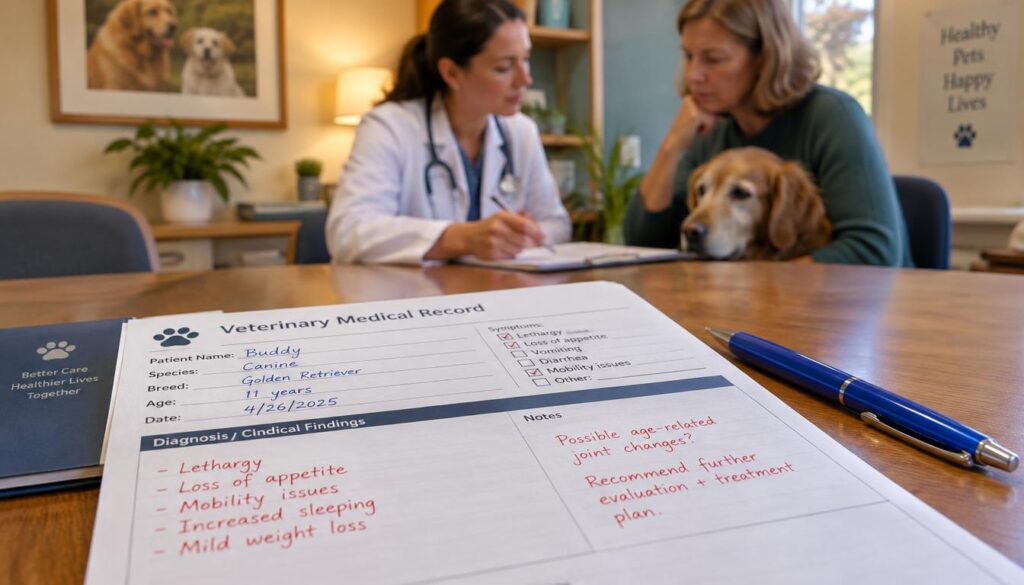
Symptoms can count before a diagnosis
An insurer may treat a condition as pre-existing if signs appeared before the policy started or during its waiting period. For example, a dog with limping noted in a record may face a different decision later, even if the diagnosis came months afterward.
ASPCA says pets with pre-existing conditions can still enroll and receive coverage for other eligible future accidents and illnesses. Treatment related to the pre-existing condition may remain excluded. We should separate the named condition from unrelated future care.
When a cured condition may qualify later
ASPCA says a curable pre-existing condition may become eligible if the dog has been cured and free of symptoms and treatment for 180 days. Its rule excludes knee and ligament conditions. This is a provider-specific rule, not a standard that applies across the market.
AKC has a separate rule: in 2026, its policy offers coverage for curable and incurable pre-existing conditions after 365 days of continuous coverage, subject to state availability. Its terms also say cruciate ligament illness and intervertebral disc disease (IVDD) may qualify after 180 days of continuous coverage.
Why chronic and knee conditions need special attention
ASPCA says knee or ligament conditions that occur before the effective date or during a waiting period will not be covered in the future. AKC’s terms differ, and its special rules do not apply to other insurers.
GEICO says its Embrace-partnered coverage excludes pre-existing conditions. These different rules show why we should ask about the dog’s named diagnosis, symptoms and state, rather than rely on a general claim about an insurer.
Get the insurer’s answer about the dog’s specific diagnosis in writing before relying on a possible exception.
How Do Waiting Periods Affect a New Policy?
A new policy does not necessarily cover every condition on its effective date, and symptoms during a waiting period can affect future claims. Different waits apply to different events, such as accidents, illnesses or orthopedic problems. The policy issued for our state controls the start dates and limits.
Illness and orthopedic waiting rules are not the same. ASPCA coverage starts on the 15th day after the policy’s effective date. Several other insurers use a 14-day illness wait, while Fetch and Healthy Paws use 15 days.
Illness and accident start dates
Embrace, Lemonade, MetLife, Pets Best and Spot have 14-day illness waiting periods in the described terms. Fetch and Healthy Paws have 15-day illness waits. Check the accident start date separately, since an illness timeline does not tell us when accident coverage begins.
A waiting period can affect whether signs count as pre-existing. If a dog limps during an orthopedic restriction, a later claim for the same issue may face a different outcome than an unrelated illness claim.
Orthopedic rules and state differences
Lemonade has a 30-day orthopedic waiting period. Embrace and Fetch have 180-day orthopedic exclusions in the described terms. The National Association of Insurance Commissioners’ model allows illness and non-accident orthopedic waits of no more than 30 days, and prohibits accident waiting periods.
California and Florida require a way to waive the wait with a veterinary exam. A state rule does not mean every policy has identical terms, and the exam process may have conditions.
Before enrollment, we can check four points:
- The date accident coverage begins.
- The illness waiting period.
- Orthopedic or knee restrictions.
- Any state-specific waiver through an exam.
Policy forms and state rules can differ, so confirm the orthopedic and accident terms in the policy issued for your state, not just the general quote page.
How Can You Adjust Premiums and Out-of-Pocket Costs?
Lower premiums usually come with a tradeoff in the amount you pay or the amount the policy can reimburse. Policy settings shift the risk between the insurer and us. A lower monthly cost does not mean broader coverage or a promise to pay every bill.
Raising the deductible or lowering the annual limit can reduce a premium while increasing our financial exposure. The out-of-pocket cost is our share of an eligible bill, including amounts left after reimbursement and policy limits.
Set the deductible and annual limit
The deductible is the amount we pay before reimbursement begins. A higher deductible can lower the premium, but we must cover more eligible costs first. A lower annual limit can also reduce the premium while leaving less insurance money for a costly year.
ASPCA lets customers customize an annual limit, annual deductible and reimbursement percentage for senior-dog plans. Its deductible options are $100, $250 and $500. GEICO’s Embrace-partnered plan also lets policyholders choose these main policy settings.
Choose a reimbursement rate you can afford
The reimbursement rate is the share of eligible expenses the insurer pays after the deductible. A higher rate can leave us with a smaller share of eligible bills, but its premium may be higher. Exclusions and limits still apply at any rate.
Compare these four choices when reviewing quotes:
- Annual limit: the maximum the insurer pays in a policy year.
- Deductible: the amount paid before reimbursement begins.
- Reimbursement rate: the insurer’s share of eligible expenses.
- Multi-pet discount: any price reduction for enrolling more than one pet.
GEICO says its Embrace partnership offers a 10% multi-pet discount when more than one pet is enrolled in one policy. That discount affects the price, not which bills qualify.
Cheap pet insurance that covers everything is not a realistic promise. Policy limits, exclusions and cost-sharing can leave bills unpaid, even with a low premium.
Choose settings you could afford both in an ordinary month and after a large veterinary bill.
How Do Claims and Vet Payments Work?
Most pet-insurance claims require us to pay the veterinarian first and request reimbursement for eligible expenses. Approval and payment are separate steps, and the time to receive money begins after the insurer approves a claim. A clinic’s ability to take direct payment can vary by insurer and arrangement.
Paying the invoice upfront is common, even when a policy later reimburses part of it. We should learn the claim method and payment options before an emergency forces a quick decision.
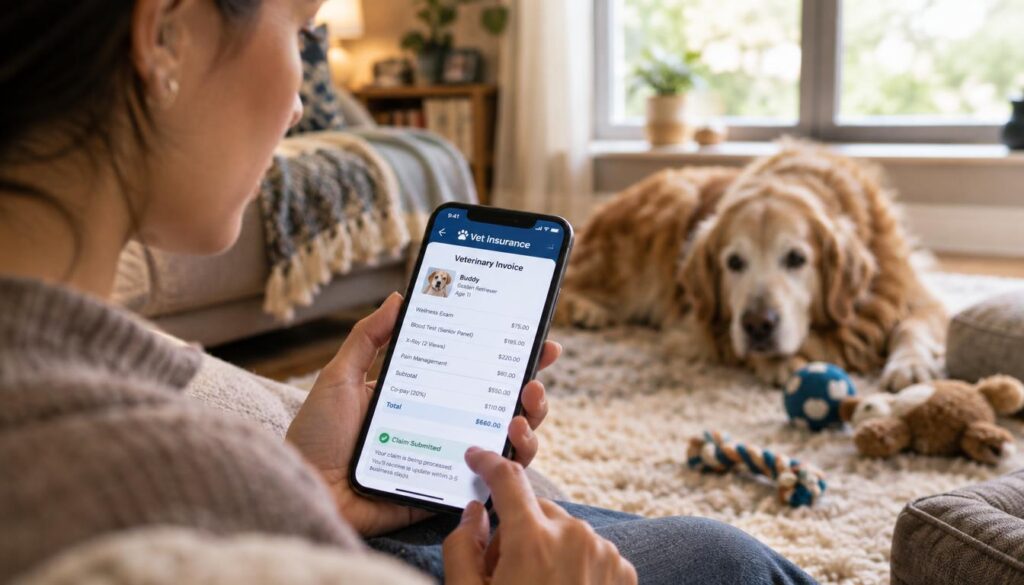
These providers describe different claim and veterinarian options:
| Provider | Veterinarian access | Claim method | Payment detail |
|---|---|---|---|
| ASPCA | Check policy terms for clinic access | Mobile app | Direct deposit or check |
| GEICO through Embrace | Any U.S. vet, emergency clinic or specialist | Mobile app or online portal | Reimbursement may arrive within days after approval |
| Nationwide | Any licensed vet in the U.S. or abroad | Submit claim with paid invoice | Pay the clinic and request reimbursement |
ASPCA lets customers submit claims through its app and receive payment by direct deposit or check. GEICO says Embrace claims can be sent through an app or online portal, with reimbursement possible in as little as a few days after claim approval.
That timing does not mean every claim receives approval or payment within a few days. The insurer must review the bill against the policy, and reimbursement follows only if expenses qualify.
GEICO says its Embrace Healthy Pet Deductible reduces the annual deductible by $50 for each year without a claim reimbursement. The reduction is tied to a year without claim reimbursement, not simply to owning the policy.
Before enrolling, confirm whether your preferred clinic accepts any direct-payment arrangement or whether you need to cover the invoice upfront.
Is Pet Insurance Worth It for an Older Dog?
Insurance may be worth considering when a large eligible new bill would be difficult to pay from savings. The value depends on what could qualify, not simply on the dog’s age. We can compare likely new bills with the premium, deductible, reimbursement rate and annual limit.
A policy can help with eligible future conditions unrelated to an existing problem, but may not help with that existing condition. The dog’s medical history can shape the value of coverage more than the plan’s name.
Compare likely eligible bills with premiums
MoneyGeek’s 2026 ranges put dog arthritis treatment at $363-$2,426, cataract treatment at $1,971-$6,571 and lymphoma treatment at $3,639-$18,198. These figures show possible treatment costs, not predictions about one dog’s care or the amount an insurer would pay.
We can estimate the yearly premium, then apply the deductible and reimbursement rate to a likely eligible bill. The annual limit caps what the insurer pays during that policy year. Exclusions can reduce payment further, so a high treatment estimate does not equal a covered claim.
For example, a policy with a large deductible may offer little help on a smaller bill. It may still help with a larger eligible treatment bill, up to the annual limit. The exact calculation matters more than comparing premiums alone.
Know when saving may fit better
Saving independently gives us more flexibility for excluded care, routine needs or bills that do not meet a policy’s terms. But a savings account does not create an insurance limit or transfer the risk of a very large bill.
Insurance may suit households that value help with eligible, unexpected costs and can manage the premium and upfront payment. Saving may suit owners who prefer direct control over their money and can build funds over time.
Decide using a bill your veterinarian expects and the exact reimbursement calculation in the policy.
What Can You Do if Veterinary Care Is Unaffordable?
If a veterinary bill is out of reach, ask the clinic about payment options and contact several assistance programs before the procedure when possible. More than one source may help, since several programs together may cover costs that one cannot. Approval and funding are never guaranteed.
Ask early about lower prices, financing, price comparisons or a second opinion. Best Friends recommends contacting multiple financial-aid sources before a procedure when possible, rather than waiting until the bill is due.
A veterinary clinic may negotiate a lower price or offer financing over time. It may also suggest comparing prices or getting a second opinion. CareCredit offers veterinary financing subject to qualification, and Scratch offers payment plans for pet care.
These programs serve different needs, so we should match the bill to the kind of help offered:
| Program | Assistance type | Relevant situation |
|---|---|---|
| CareCredit | Veterinary financing | Qualified applicant needs to spread payments |
| RedRover | Emergency veterinary funding | Emergency care or help during a disaster |
| The Pet Fund | Help with non-basic, non-urgent care | Needed treatment is not urgent |
| Paws 4 A Cure | Veterinary care assistance | Dog or cat needs care in the United States |
| Brown Dog Foundation | Help offset veterinary costs | Emergency costs or chronic-condition treatment |
RedRover offers funding for emergency veterinary care and help during natural disasters and other emergencies. The Pet Fund assists with non-basic, non-urgent care, while Paws 4 A Cure helps dogs and cats throughout the United States.
Brown Dog Foundation helps offset emergency veterinary costs and treatment for chronic conditions. The purpose and rules differ by program, so we should ask what documents and timing each one requires.
Contacting several groups can take time, and some may not fund a particular case. If treatment can wait, reach out before the procedure and ask the clinic whether a delay is medically safe.
Check each program’s eligibility and application timing before counting on its funding.
What Will Pet Insurance Usually Exclude?
A policy’s coverage list is only half the decision, because exclusions and limits determine which bills remain yours. Common exclusions include routine or elective costs, but insurers do not all exclude the same treatments. The policy’s definitions and state documents spell out the rules.
Grooming, elective procedures and costs tied to breeding, pregnancy or birth are generally excluded. A plan may also exclude a particular condition or cap what it pays, so we should not assume one company’s terms apply to another.
Routine care and nonmedical expenses
Routine items such as grooming may not qualify under accident-and-illness insurance. Wellness benefits can cover some routine care, but they may be separate from an insurance policy and follow different rules.
California defines a wellness program as separate from an insurance policy. The state requires disclosure that a wellness program is not a regulated insurance product. That distinction matters when a seller describes routine benefits beside insurance coverage.
Nationwide’s Modular Plan Accident-only example has a $5,000 annual limit, 80% reimbursement and a $250 annual deductible. It excludes pre-existing conditions and illness. The example shows why accident coverage should not be mistaken for illness coverage.
Policy-specific limits and disclosures
We should read the definitions, annual limits, deductible, reimbursement terms and exclusions together. A benefit may apply only to certain treatment or conditions, while a waiting period can affect when coverage begins.
Sample documents can show details that a short plan summary leaves out. State forms may differ, so the policy for the dog’s state matters more than general marketing language.
Read the exclusions and sample policy for the state where the dog will be insured.
How Do You Choose a Plan for Your Dog?
The most useful comparison holds the dog’s details and policy settings constant while checking the terms that matter to your household. Equal inputs make prices easier to compare, but they do not make policy wording identical. We should start with the dog’s health history and the care we can afford.
Compare the same dog, deductible, annual limit and reimbursement rate across quotes. CNBC Select used a 9-year-old beagle mix in Manhattan ZIP code 10017, with a $5,000 annual limit, a $500 deductible and 80% reimbursement.
Keep the dog profile and policy settings the same across quotes. Then compare the coverage terms that could change a claim.
Match the policy to the dog’s health history
A dog’s age and medical record can affect enrollment and future claims. We should look at prior symptoms, veterinary advice and treatment, not just the diagnosis list. A condition’s name may trigger different rules among insurance companies.
Use this checklist to compare the details that can change the decision:
- Dog’s age, medical record and state availability.
- Written treatment of each named condition.
- Accident, illness and orthopedic waiting periods.
- Annual limit, deductible and reimbursement rate.
- Claim-payment process and renewal pricing.
Ask for written terms about a condition the dog already has. Also check whether the plan covers expected treatment for that condition, rather than relying on a general claim about illness coverage.
Compare quotes and terms on equal settings
CNBC Select considered coverage limits, deductibles, reimbursement rates, age restrictions, costs, discounts, covered treatments and wellness options. These factors help us compare plans beyond the monthly premium. A quote is only useful when each company uses the same dog profile.
For example, changing the dog’s ZIP code or age can change the quote, just as lowering the annual limit can change the price. We should keep the profile and settings fixed, then review differences in exclusions and covered care.
Save the policy documents and written answers alongside the quote before making a final choice.
Conclusion
A senior dog’s age does not automatically rule out coverage, but the policy’s exclusions and cost-sharing determine whether it will help. Medical history matters, because a pre-existing condition or symptoms during a waiting period may affect reimbursement. Limits and deductibles also shape how much of an eligible bill remains ours.
We can make a better choice by matching the policy to the dog’s likely care and our ability to handle upfront costs. A personalized quote shows the price for the dog’s details, while policy documents show the rules behind that price.
Request a quote using your dog’s accurate details, then verify the exclusions and waiting periods before enrolling.