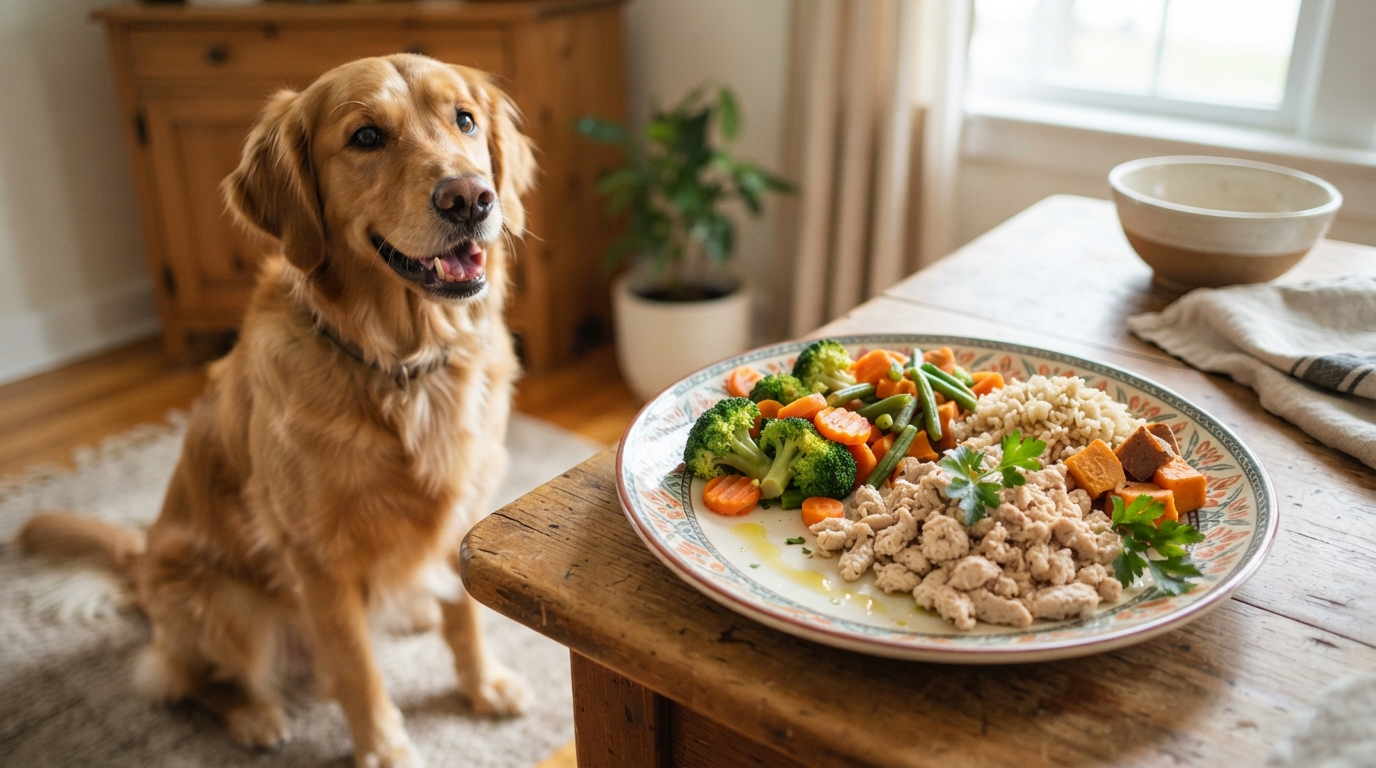
A bowl made with fresh ingredients can still leave a dog short of essential nutrients if the meal has not been formulated as a complete diet. Homemade Pet Food Nutritional Balance depends on the dog’s needs, not the freshness or look of each ingredient. Choosing chicken, vegetables, and grains does not ensure that a meal has the right nutrient amounts.
Some recipes need specific supplements to fill gaps that ordinary ingredients cannot cover. A small change to a recipe can also affect its balance. We can use this guide to judge food choices, assess recipes, and find the right professional support for a dog’s health and care.
Our goal is a practical way to think about homemade feeding, not a do-it-yourself formula. A complete recipe must fit the dog’s life stage and be followed as written. Treat a homemade meal as a planned diet, not a mix of healthy-looking ingredients.
Key Takeaways
- Fresh ingredients do not prove a diet is complete.
- Use a recipe made for the dog’s life stage.
- Measure ingredients and supplements as written.
- Do not make swaps without professional guidance.
- Ask a veterinarian about specialist help when needed.
Why Do Homemade Dog Food Recipes Cause Nutritional Deficiencies?
The central problem is that a homemade bowl can look varied and wholesome while still missing nutrients or containing them in the wrong amounts. Appearance cannot show whether a dog food recipe meets the dog’s needs. A mix of meat, grains, and vegetables may still lack essential nutrients.
Recipe reviews have found common nutrient gaps, but they do not prove that every homemade diet is deficient. One assessment examined 1,726 owner-reported homemade diets in 2025. Only 6% had the potential to be nutritionally complete, and researchers said the share could be lower because exact ingredient amounts were not included.
The 2025 Texas A&M assessment used owners’ reported ingredients and preparation methods. A different evaluation reviewed 200 dog food recipes. It found that 95% lacked at least one essential nutrient, while 83.5% had multiple deficiencies. Only 10 recipes met minimum nutrient standards.
A dog’s normal appetite or appearance alone cannot confirm that a long-term diet is nutritionally complete.
The two assessments looked at different groups and methods, so their figures should not be combined. Still, both show why a recipe’s appearance is a poor test of its nutrition. Exact ingredient amounts matter because a small change can alter the nutrient balance.
Missing nutrients may not cause clear problems right away. Some effects develop over time, while early signs can look like ordinary changes in energy, skin, or digestion. Recipe findings describe risks across groups of recipes, not a diagnosis for one dog.
Owners may find a recipe appealing because it uses familiar foods or matches a dog’s appetite. Those traits do not show whether the meal provides the right nutrients each day. A dog’s normal appetite or appearance alone cannot confirm that a long-term diet is nutritionally complete.
How Do We Build Homemade Pet Food Nutritional Balance?
A homemade diet has to match the dog’s life stage and meet a full nutrient profile, not just provide enough protein. Life stage changes the nutrient levels a dog needs. Dry-matter basis means the nutrient concentration in food after its water content is removed from the calculation.
AAFCO sets separate nutrient profiles for adult maintenance and growth and reproduction. The growth and reproduction profile covers puppies and pregnant or nursing dogs. The figures below are benchmarks, not a recipe or a way to calculate a home-cooked meal.
The table gives AAFCO profile values on a dry-matter basis. Minimums set lower limits, while maximums cap certain nutrients. A diet must fit the full profile, not just the entries that seem easiest to measure.
| Nutrient | Adult maintenance | Growth and reproduction |
|---|---|---|
| Crude protein | Minimum 18.0% | Minimum 22.5% |
| Crude fat | Minimum 5.5% | Minimum 8.5% |
| Calcium | 0.5%-2.5% | Minimum 1.2%; maximum 1.8% for large-breed puppies |
| Phosphorus | 0.4%-1.6% | 1.0%-1.6% |
| Calcium-to-phosphorus ratio | 1:1-2:1 | 1:1-2:1 |
AAFCO nutrient profiles set minimums and, for some nutrients, maximums. A diet’s nutritional adequacy can be substantiated through laboratory analysis or feeding trials. A lab test measures selected nutrients in the submitted sample, so it does not by itself prove that every batch or recipe is complete.
Our guide to pet nutrition requirements explains why a complete diet must supply six nutrient classes in suitable amounts. Needs differ by species and life stage. Dogs and cats, for example, cannot safely share one unreviewed recipe.
An informal 80/20 split of ingredients does not establish nutritional completeness. It does not show whether the food meets nutrient needs or keeps nutrients within safe limits. Extras alongside a complete diet are generally kept below 10% of daily calories.
Use profile figures to understand the standard, not to improvise a recipe from isolated nutrient targets. A diet can meet one number and still miss other nutrients or exceed a maximum.
Which Nutrients and Supplements Need Exact Balancing?
A supplement is useful only when it supplies a nutrient the specific recipe lacks in the amount that recipe requires. Specific amounts matter because dogs need nearly 40 essential nutrients each day. Meat, vegetables, and grains do not automatically provide every vitamin, mineral, and essential fatty acid in the needed amounts.
The best supplements for homemade dog food are the products and amounts listed in the dog’s formulated recipe. A generic multivitamin or an improvised eggshell addition may not supply the right nutrients. A supplement made to complete a homemade diet also differs from one meant to top up an already complete commercial food.
Why Calcium and Phosphorus Must Stay in Range
Calcium and phosphorus work as a linked balance, not as separate ingredients to add by guesswork. An imbalance can harm bones and kidneys. Serious bone problems can include rubber jaw, in which the jaw becomes soft.
Adding a calcium source without accounting for the recipe’s phosphorus can shift the balance. Leaving out a prescribed calcium supplement can also create problems. Texas A&M veterinary nutritionist Katie Tolbert advises following each recipe exactly, including every supplement.
A bowl of meat may seem rich and substantial, yet it does not tell us how its minerals compare. That is why one ingredient cannot stand in for a full formulation. A supplement is not a shortcut to balance.
Which Supplements Close Recipe Gaps
The formulated recipe should name each product and dose. The ingredients in supplements can differ, so one product may not replace another, even when labels use similar terms. Ask the formulating professional before changing a brand, dose, or source.
Long-term homemade feeding calls for help from a board-certified veterinary nutritionist. The professional can review the recipe and may recommend testing a food sample to see whether the prepared diet matches it. A lab result can check a sample, but it cannot replace sound recipe design.
Keep every prescribed supplement in the recipe and confirm a planned change with the professional who formulated it. Pet food nutritional analysis can help explain what a sample test measures and what it cannot establish about the whole diet.
Which Ingredients Are Safe for Dogs?
Some familiar kitchen foods can seriously harm dogs, so ingredient safety comes before experimenting with a new meal. Known hazards come first, even when a food seems natural or is safe for people. A recipe should also account for how each safe ingredient fits the dog’s needs.
Grapes, onions, raw foods, bones, and xylitol can pose serious risks to dogs. Grapes and raisins can cause kidney damage. Onions, garlic, and chives can irritate the gut and damage red blood cells, which may lead to anemia.
| Ingredient or food | Main hazard | Possible effect |
|---|---|---|
| Grapes and raisins | Toxicity | Kidney damage |
| Onions, garlic, and chives | Compounds that harm red blood cells | Gut irritation and anemia |
| Raw meat and raw eggs | Salmonella and E. coli exposure | Illness in pets and people |
| Bones | Hard or sharp pieces | Gut injury or obstruction |
| Xylitol | Rapid blood sugar effects | Low blood sugar and possible liver damage |
Raw meat and raw eggs can carry Salmonella and E. coli, which can harm pets and people. Bones can injure or block a dog’s gastrointestinal tract. Xylitol can cause low blood sugar and possible liver damage.
Too much salt can increase thirst and urination. Depending on the amount consumed, it may also cause abnormal blood electrolyte levels. Dog food to stay away from includes these known hazards, not one universally unsafe type of meat.
Plain carrots, green beans, or peas can fit some dogs’ meals. The recipe and the dog determine whether a vegetable suits the meal and how much belongs in it. A food’s healthy reputation does not make it a fit for every dog.
No single superfood can make an incomplete recipe complete. A vegetable or oil may add a useful nutrient, but it cannot fix every gap in an unbalanced meal. Keep potentially toxic foods and unsafe scraps out of the dog’s reach, even when the rest of the meal is carefully planned.
How Do We Choose a Reliable Recipe?
The most reliable starting point is a recipe formulated for the individual dog or a clearly specified group and followed exactly. Clear directions matter because a recipe can lose its balance when ingredients or steps change. Vet-approved homemade dog food recipes help only when they suit the dog and its life stage.
Recipes for homemade pet food nutritional balance should list exact ingredients, amounts, preparation, supplements, and feeding directions. A general internet recipe may use familiar foods but leave key details unclear. A recipe should say whether it suits daily feeding or occasional use.
What Makes a Recipe Fit for Long-Term Feeding
MSPCA-Angell offers sample recipes balanced by a certified veterinary nutritionist for healthy dogs weighing 15, 30, or 60 pounds. Those recipes are intended for long-term feeding when owners follow the instructions. The weight range and health status matter; a sample recipe is not automatically right for every dog.
Balance It provides a recipe builder for homemade dog or cat meals and says its recipes include essential nutrients. JustFoodForDogs DIY Nutrient Blends are designed for use with the brand’s corresponding homemade recipes. Both options depend on following the matching instructions.
These tools do not grant permission to swap ingredients. Replacing a meat, oil, or supplement can change the recipe’s nutrient balance. The same applies to changing the cooking method or skipping a step.
The professional credential to check is board-certified veterinary nutritionist. That term became a registered trademark in 2019. A general pet-nutrition label is not the same credential and does not by itself show specialist training.
How to Choose the Best Homemade Dog Food Recipes
The best homemade dog food recipes make it possible to prepare and serve the meal as intended. Check these details before relying on one for regular feeding:
- Fit for the dog’s species, age, life stage, and health.
- Exact ingredient amounts, including weights when listed.
- Required supplements, with named products and doses.
- Clear cooking instructions, including timing and method.
- Full feeding directions, including serving guidance and intended use.
Owners often need guidance beyond a recipe page, especially if the dog’s needs change. Ask who formulated the recipe and whether it was designed for long-term feeding. A named expert or clear tool is not a substitute for checking the dog’s fit.
Reject any recipe that leaves its supplement, measurement, or feeding instructions open to guesswork. A recipe that cannot be followed as written cannot reliably deliver the intended diet.
How Do We Portion Meals Without Guessing?
The right serving is the amount of the specific recipe that meets the individual dog’s calorie needs, not a fixed cup measure for every dog. Use the recipe’s yield and serving directions rather than estimating a bowl by sight. Portions depend on the recipe’s calories and the dog’s weight, age, activity, body condition, and health.
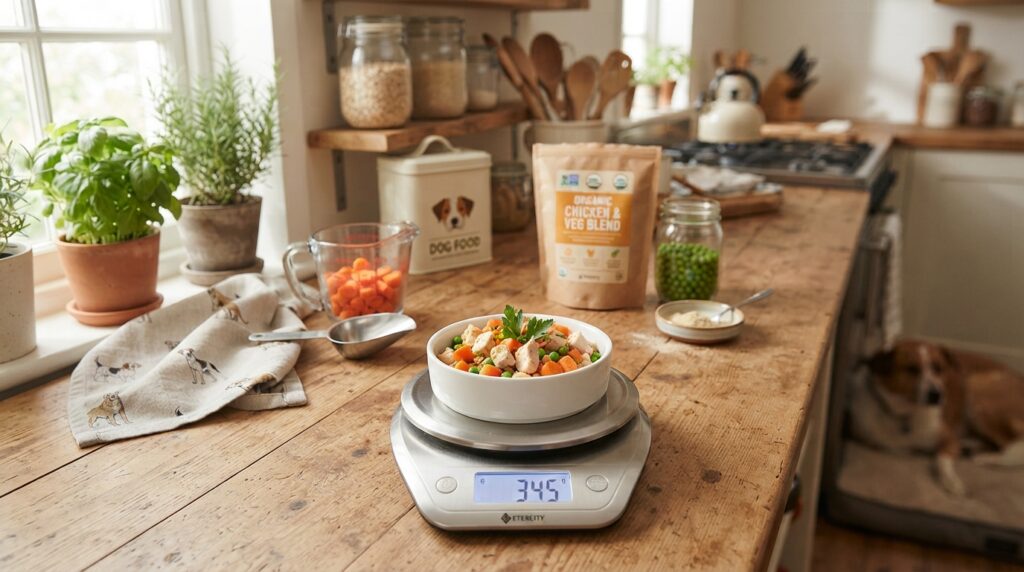
Measure recipe ingredients by weight with a digital food scale. Some homemade recipes list weights in grams and milligrams, amounts that volume measures cannot match reliably. A packed cup and a loose cup can hold different amounts.
Use the recipe’s calorie and serving instructions to portion the finished batch. If the dog’s weight or activity changes, ask the veterinarian to reassess the daily amount. Cooking method and timing can affect ingredient weight and nutrient concentration, so keep them consistent.
Substitutions can also alter nutrient balance. Even a small change in an ingredient may affect the finished meal’s calories or nutrients. Follow the recipe’s yield when dividing a batch into daily portions.
- Confirm the dog’s daily calorie target with a veterinarian.
- Use the recipe’s stated ingredient weights.
- Divide the prepared batch using the recipe’s yield.
- Monitor the dog’s weight and body condition.
Following a plan can be difficult over time. Fewer than 15% of owners followed their original home-cooked diet plan after one year. A digital scale and repeatable portions can make the routine easier to maintain.
Recheck portions after a meaningful change in weight, activity, or health rather than compensating by eyeballing the bowl.
How Should We Prepare and Store Homemade Meals Safely?
Safe home preparation means treating the dog’s meal like perishable food for people while preserving the recipe’s exact method. Keep the method steady, including the cooking temperature, timing, and steps for adding supplements. Changes can affect the meal’s safety and the recipe’s intended result.
Cook each batch as the recipe directs, then cool and pack it promptly. Do not change the cooking method or add supplements at a different stage unless the recipe says to do so. Careful steps help keep each prepared meal consistent.
Cook and Handle Ingredients Consistently
Wash hands and clean work surfaces before and after handling food. Keep raw ingredients separate from cooked food and ready-to-serve portions. Clean tools and containers between tasks to limit the spread of germs.
Use these handling steps for each batch:
- Wash hands and clean work surfaces.
- Keep raw ingredients separate from prepared portions.
- Cool and pack meals promptly.
- Label containers with preparation dates.
Follow the recipe’s cooking instructions each time, rather than relying on memory. The same ingredient can have a different cooked weight depending on method and timing. That can affect the amount in each portion.
Refrigerate and Freeze Portions Safely
Home-prepared pet food can usually stay in the refrigerator for about three days. Freezer storage is about one or two months, depending on how well the food is sealed. Label dates help us track each batch.
Thaw portions safely and serve them without leaving food out for extended periods. Keep the containers sealed during storage and use clean tools to remove servings. If the food has been stored beyond the recipe’s safe window, do not serve it.
Storage time depends in part on how well a meal is packed for the freezer. A tight seal helps protect food during storage, while a loose package offers less protection. Discard a portion that has been stored beyond the recipe’s safe window or whose handling is uncertain.
When Does a Homemade Diet Need Veterinary Oversight?
A dog with a medical condition or special dietary need should have a professional assess the diet before the household starts cooking. Individual care comes first for dogs with allergies, existing health problems, or complex care plans. A veterinarian can decide whether a board-certified veterinary nutritionist should help.
Growing puppies need specialist oversight because their nutritional needs change quickly. An improvised homemade diet can miss needs during growth. Pregnancy and nursing also require the distinct growth-and-reproduction nutrient profile.
MSPCA-Angell recommends consulting a certified veterinary nutritionist when a dog has a pre-existing medical condition or special dietary needs. A specialist can consider the dog’s diagnosis, current food, and care plan together. A recipe for a healthy adult dog may not suit a dog with a health issue.
Allergies can also make ingredient choices more complex. A dog may need a specific plan that avoids certain foods while still meeting its nutrient needs. Repeated ingredient swaps can make it harder to tell whether the diet is helping.
Seek veterinary advice for persistent digestive signs, unexplained weight changes, appetite changes, or new symptoms. Do not keep changing recipes to test possible causes. A symptom may need a health check, not another ingredient substitution.
Arrange an individualized nutrition consultation before making a major diet change for a puppy or medically complex dog.
Bring details about the dog’s health, current food, and any symptoms to the appointment. These facts help the veterinarian judge whether a homemade diet fits the dog’s care. A nutrition plan can then account for the dog’s needs rather than relying on a general recipe.
For more on the role of nutrition care across species and life stages, see pet nutrition requirements. Arrange an individualized nutrition consultation before making a major diet change for a puppy or medically complex dog.

Conclusion
Homemade meals can be a responsible option when the recipe meets the dog’s needs and every instruction is followed. A complete diet depends on exact ingredients and required supplements, not good intentions or appealing foods.
Our next step can be simple: ask the dog’s veterinarian whether a board-certified veterinary nutritionist should formulate or review the planned diet. Bring the dog’s health history and current food to that visit.
Before changing the bowl, bring the dog’s health history and current diet to a veterinary appointment.