
A dog that vomits after a meal or keeps licking its paws may be reacting to food, but those signs can have other causes. Canine food intolerance symptoms can overlap with signs of other health problems, so one meal rarely tells us what is wrong. We can watch for patterns and record when symptoms start, how long they last, and what the dog ate. A pet’s age, health, and daily routine can also shape what a veterinarian checks. We’ll look at signs that may fit a food reaction, possible triggers, and ways a veterinary team can assess them. A home diet change may help symptoms, but it does not confirm the cause. Persistent or recurring symptoms deserve a veterinary assessment rather than a guess based on one meal.
Key Takeaways
- Food reactions can affect a dog’s gut, skin, or both.
- Similar signs can come from allergies, parasites, or other illness.
- A symptom diary can help the veterinary team assess patterns.
- A food allergy needs a controlled elimination-challenge trial to confirm.
- Veterinary guidance can help protect a pet’s health during diet changes.
Canine Food Intolerance Symptoms Often Include Gut and Skin Clues
Food-related reactions in dogs most often show up as digestive trouble, skin irritation, or a combination of the two. An adverse food reaction is an abnormal response to a food that may involve the immune system, as in a food allergy, or occur without an immune response, as in food intolerance. Digestive symptoms can occur with either type of reaction.
Food intolerance often causes gut signs, while food allergy can affect the skin, gut, or both. These signs may be intermittent, appearing for a time and then easing, or they may persist over weeks. That pattern can make a food link hard to spot.
Dogs with cutaneous signs of food allergy may also have digestive signs. About 30% to 50% of these animals vomit, have diarrhea, defecate more often, or show abdominal pain. Food allergy can also bring conjunctivitis, hives, or sneezing.
Skin and digestive signs can raise suspicion of a food-related problem, but they do not prove food caused them.
Skin and gut signs can occur together, but they may also have separate causes. A dog might have a food reaction and another condition at the same time. We should note when each sign appears rather than assuming one symptom explains them all.
A symptom pattern can guide a veterinary conversation, but it cannot confirm a food allergy on its own.
How Does Food Intolerance Differ From Food Allergy?
A food allergy involves an immune response to a food protein, while food intolerance does not. Both are adverse food reactions, but only an allergy involves a specific immune response. Their signs can overlap, so appearance alone cannot always tell us which reaction a dog has.
In a food allergy, the immune system responds to a food component, usually a protein. The dog typically needs prior exposure before an allergy develops. The reaction may then show up after later meals containing that protein.
The immune response behind a food allergy
An allergy is not simply a dislike of an ingredient. The immune system treats a food protein as a threat and reacts to it. This can lead to skin signs or digestive symptoms, and those signs can look like other health problems.
Food allergies can develop to proteins a dog has eaten before. A familiar ingredient is not automatically safe for a dog with a food allergy. We need the dog’s past food history to help interpret a suspected reaction.
Why intolerance can begin with a first exposure
Food intolerance has no specific immune response. It may begin with a dog’s first exposure to a food, though it can also occur after later exposures. That timing differs from the usual pattern for a food allergy.
| Reaction type | Immune response | Typical onset |
|---|---|---|
| Food allergy | Present | Usually after repeated exposure |
| Food intolerance | Not specific | First or later exposure |
| Both | Different by type | Can have overlapping signs |
| What signs can suggest | Skin signs more characteristic of allergy | Digestive signs can occur with either |
A reaction after the first exposure fits intolerance better than allergy, but a veterinarian still needs to assess the full history.
Which Digestive Symptoms Should You Watch For?
Repeated vomiting, loose stool, or gas after eating can point to digestive upset, but none of those signs proves a food intolerance. Dogs with food intolerance may have several gut symptoms, and rich foods can also upset digestion. Similar signs can follow dietary indiscretion or another illness.
A dog may get into garbage, eat a new treat, or swallow something unsuitable outdoors. A stomach or intestinal illness can also cause digestive trouble. These possibilities matter because a suspected food trigger is not a confirmed cause.
Vomiting, diarrhea, gas, and abdominal discomfort
Common digestive signs include changes in stool, gas, and discomfort. We can note whether signs appear after a certain meal, but timing alone cannot establish which ingredient is responsible. A vet can weigh the pattern alongside the dog’s health and diet history.
- Vomiting after a meal
- Loose stool or diarrhea
- Gas that is unusual for the dog
- Bloating or a visibly full belly
- Abdominal discomfort, such as restlessness or a guarded belly
High-fat foods can trigger digestive upset in some dogs. A rich table scrap may be the issue, even if the dog eats its regular food without trouble. New food sensitivities are only one possible explanation among many.
Lactose-related digestive upset
Lactose intolerance in dogs can cause diarrhea, bloating, and abdominal discomfort after cow’s or goat’s milk. Milk is not a useful test for a food allergy, and a reaction to it does not identify another food trigger. A veterinarian can assess whether the timing and signs fit lactose intolerance.
The same symptoms may come from a sudden food change, scavenging, or illness. We can record the meal, treats, and time symptoms began, then share those details with the veterinary team. Keep a brief record of meals, treats, and symptom timing to share with the veterinary team.
Can Food Reactions Cause Itchy Skin or a Rash?
Persistent, nonseasonal itching, especially around the paws, ears, face, or belly, can be a sign of food allergy in dogs. A dog food allergy can cause a rash or inflamed skin, but itching alone does not identify the trigger. Environmental and flea allergies can also make a dog itch.
Food allergies may cause a dog to scratch or lick so often that hair falls out. Red or inflamed skin can appear where the dog focuses that behavior. The area under the tail may also itch, along with the paws, face, ears, and belly.
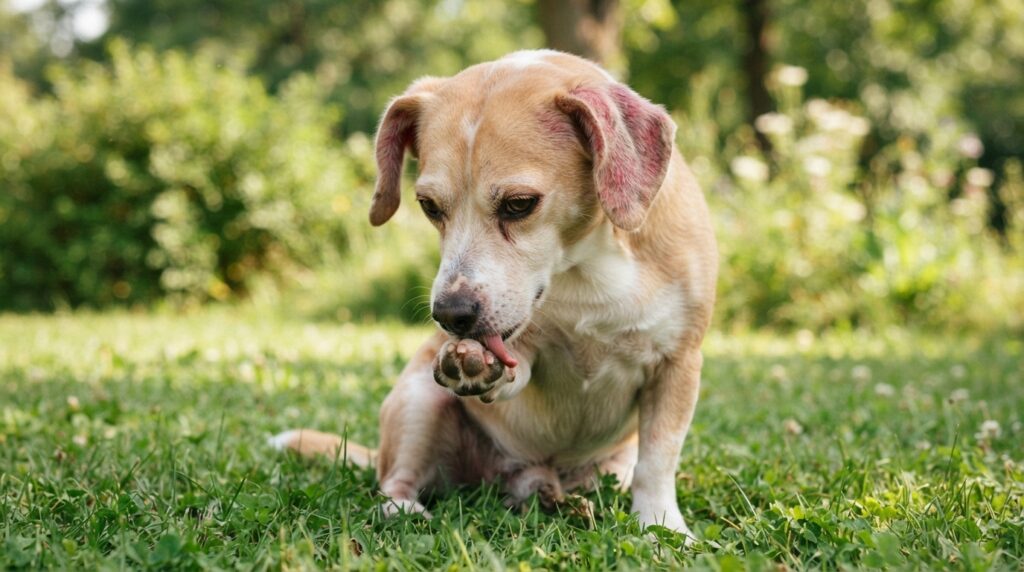
Persistent itching and affected areas
Food allergies can affect a dog throughout the year, rather than only during a certain season. Still, nonseasonal itching does not prove that food is the cause. Fleas and environmental allergies can cause similar skin signs, so we need a veterinary assessment of the whole picture.
Scratching and licking can add to the skin damage. A dog may break the skin or lose hair in spots it reaches often. Those changes are signs of discomfort, not a way to name the cause.
Skin changes and recurring infections
Some dogs with food allergies have recurring bacterial or yeast infections of the skin or ears. Infection can worsen itching and may need care beyond changing the dog’s food. A rash can also have other causes, including parasites or skin conditions.
When a dog’s ears keep flaring up, the pattern deserves attention even if the skin looks normal elsewhere. We can note which areas itch, whether hair loss appears, and how often infections return. A recurring ear or skin infection should be checked by a veterinarian, even if a diet change seems to help.
Which Foods Commonly Trigger Reactions in Dogs?
Beef, dairy, and chicken are the most frequently reported food allergens in dogs with cutaneous adverse food reactions. These percentages describe reported allergens among affected dogs, not the chance any one dog will react. A dog can develop a food allergy to a protein it has eaten before.
The reported shares can help put common food triggers in context, but they cannot predict an individual dog’s reaction. Food history matters because prior exposure can include foods from past diets, treats, or mixed ingredients. One ingredient name does not tell us whether a food suits a particular dog.
| Reported food allergen | Share of reported cutaneous adverse food reactions | Reader takeaway |
|---|---|---|
| Beef | 34% | Most frequently reported in this group |
| Dairy products | 17% | Second in the reported data |
| Chicken | 15% | Also commonly reported |
| Wheat | 13% | Reported more often than lamb |
| Lamb | 5% | Reported at a lower share |
Frequently reported food allergens
The figures reflect reported allergens among dogs with skin signs linked to adverse food reactions. They do not show the risk for all dogs. A dog may react to a different ingredient, and another dog may eat the same food without a problem.
Chicken and beef are common proteins in dog food and treats, so a dog may have encountered them in many forms. We should consider the full food history, not just the current bag. A dog food ingredient quality guide can offer broader context for reading a formula, but ingredient names alone cannot diagnose a reaction.
Grains and other possible triggers
Grains are not a general cause of food allergy in dogs. A grain-free diet does not prevent allergies simply by excluding grains. It may help when a dog reacts to a particular grain or gluten, but that trigger needs to be identified.
Dogs can have food allergies to proteins they have eaten before, including ingredients in a grain-free food. The label does not establish that a diet will suit a dog with suspected allergies. Choose a diet based on a dog’s actual food history and veterinary assessment, not on a grain-free label alone.
How Long Can Food-Reaction Symptoms Take to Change?
Digestive signs often start improving within 2 to 3 weeks of an elimination diet, while skin signs can take longer. Skin signs usually improve within 4 to 12 weeks. Improvement alone does not confirm that food caused the symptoms.
Signs may return after the dog eats its previous diet again. They usually recur within 2 to 3 days, though they may take up to 2 weeks. These ranges can help us understand a response, but they do not replace the veterinarian’s plan.
Digestive and skin signs during a diet trial
Gut signs often change before skin signs do. Skin irritation can take longer to settle, so a dog’s early progress may not show the full response. We should track each type of symptom on its own.
Canine food intolerance symptoms timelines can differ from food-allergy timelines. A veterinarian can guide how we judge a response based on the dog’s signs and diet plan. An elimination diet often improves gastrointestinal signs within 2 to 3 weeks, while skin signs may need more time.
| Trial stage | Gastrointestinal signs | Skin signs |
|---|---|---|
| After starting the elimination diet | Usually improve within 2 to 3 weeks | Usually improve within 4 to 12 weeks |
| After reintroducing the previous diet | Usually recur within 2 to 3 days, up to 2 weeks | Usually recur within 2 to 3 days, up to 2 weeks |
| After resuming the elimination diet | No separate timeline specified | No separate timeline specified |
Symptom recurrence after food is reintroduced
A return of signs after the old diet comes back can support a food link. The response may not happen on the same schedule for every dog, and skin signs can take longer to show a change. The team can help interpret which symptoms return and when.
Record dates and changes rather than relying on memory. This makes it easier to compare signs during each stage of the trial. Do not stop a prescribed trial early just because one type of symptom has improved.
How Can a Veterinarian Confirm a Food Reaction?
A veterinarian confirms a true food allergy by pairing improvement on an elimination diet with a food challenge. Signs must improve on the trial diet, return when the previous diet is reintroduced, and settle again after the trial diet resumes. That full sequence is needed to confirm a food allergy.
A vet may also check for parasites, environmental allergy, or other causes of the same symptoms. A careful history helps the veterinary team decide what else to assess. Blood, saliva, and hair tests do not reliably predict food allergies in dogs.
What the veterinary assessment checks
We can bring a short record so the appointment covers the dog’s diet and symptom pattern. Include what the dog eats now and what it has eaten in the past. Treats and supplements count, too.
- Current dog food, treats, and table scraps
- Past foods, supplements, and flavored medicines
- When symptoms began and how often they occur
- Changes in stool, skin, ears, or hair
- Access to food belonging to other pets
Other pets can create an easy-to-miss food exposure. A dog may eat from a shared bowl or pick up dropped kibble, even when its own meals stay consistent. Tell the vet what access the dog has at home.
Why blood, saliva, and hair tests fall short
Blood, saliva, and hair tests are not accurate ways to predict food allergies in dogs. A test result cannot replace the controlled diet process. A veterinarian may consider other tests when symptoms suggest a different condition.
Confirmation requires three linked changes: signs improve on the elimination diet, return with the previous diet, then improve again after the elimination diet resumes. This approach is called an elimination-challenge trial. Bring the full diet history, including treats and flavored medicines, to the appointment.
What Makes an Elimination Diet Trial Work?
A useful elimination diet trial depends on feeding the selected diet consistently and nothing else that could affect the result. A veterinary team may choose a novel-protein diet based on the dog’s food history or a hydrolyzed-protein diet. In a hydrolyzed diet, proteins are broken into smaller pieces. The trial diet should be fed for at least eight weeks.
The transition to a new veterinary diet can happen gradually over two weeks. The team can help choose a diet that fits the dog’s past food exposure and needs. We should plan for the whole household, not only the dog’s main meals.
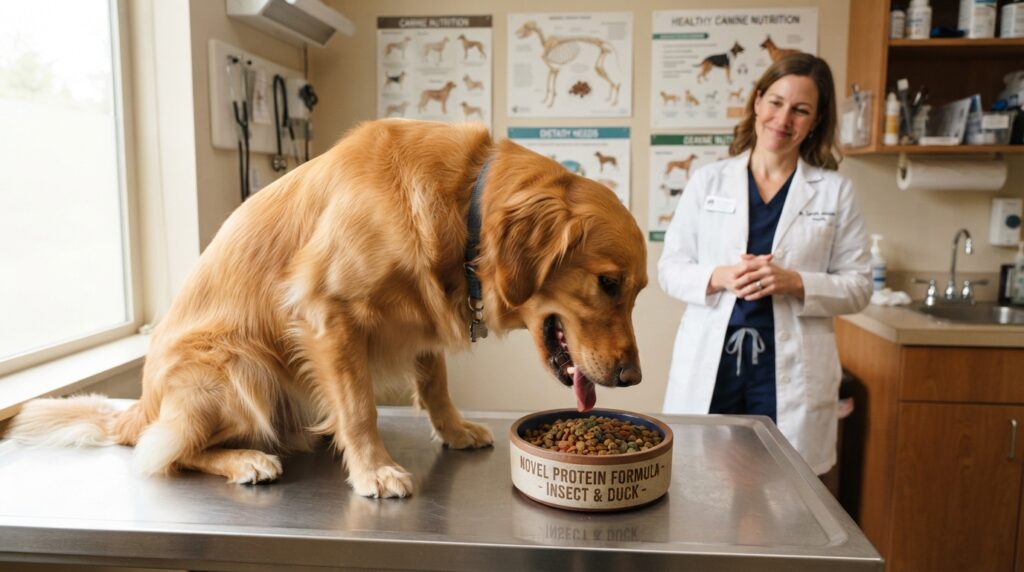
Choosing a veterinary diet for the trial
A novel-protein diet uses a protein source the dog has not eaten before, based on its food history. A hydrolyzed-protein diet uses proteins broken into smaller pieces to reduce immune recognition. The veterinary team can weigh these options against the dog’s history and nutritional needs.
Protein sources vary across dog foods, and past exposure can be easy to overlook. Our [guide to animal protein sources for pets] can help explain why food history matters when comparing protein options. The vet should still choose the trial diet.
Preventing accidental food exposures
Other foods can make trial results hard to interpret. During the trial, water remains available, but the dog should not receive extra foods unless the veterinary team approves them. Check every item the dog can chew, lick, or swallow.
- Regular food outside the selected trial diet
- Treats, table scraps, or food used for training
- Supplements not approved by the veterinary team
- Flavored oral medicines or flavored toothpaste
- Edible chews and food from other pets
Tell everyone in the home which diet the dog can eat. A well-meant treat from a visitor can add an ingredient and confuse the result. Water stays available throughout the trial.
Before the trial starts, ask the veterinary team how to handle every medication, supplement, chew, and treat your dog receives.
How Are Food Reactions Managed After Diagnosis?
The main long-term approach is to avoid the confirmed trigger or continue a suitable veterinary diet. A novel-protein diet uses a protein source selected from the dog’s food history. A hydrolyzed-protein diet breaks proteins into smaller pieces intended to reduce recognition by the immune system. No single dog food is best for every dog with allergies.
The right choice depends on the dog’s food history, suspected trigger, nutritional needs, and veterinary advice. A complete and balanced diet used during the trial may also continue long term. The dog still needs food that meets its daily nutrition needs.
Diet choices for confirmed food reactions
For a food allergy, long-term care generally means avoiding the ingredient confirmed by the trial. A novel-protein diet may suit a dog with a known food history that leaves a fitting protein choice. A hydrolyzed-protein diet may be an option when the veterinary team wants to limit immune recognition of proteins.
Some dogs can stay on the complete and balanced diet used in the trial. Other dogs may need a different plan based on health, nutrition, or the trigger found. We should not assume a food is suitable based only on a short ingredient list.
A full dog food formula matters alongside its individual ingredients. The choice should fit the dog’s needs, not a broad claim on a package.
Supporting comfort while avoiding triggers
Food intolerance treatment should also follow veterinary advice and may focus on avoiding the trigger. A dog’s symptoms may need separate care while the diet plan takes effect. We can ask the vet which changes are safe and how to keep the diet nutritionally complete.
Do not choose a long-term food by label alone; match it to the dog’s history, trigger, and nutrition needs.
Keep the dog’s meals steady once the veterinary team sets a plan. Changes made without guidance can add new ingredients and make it harder to tell what helps. Check that any long-term food is complete and balanced for your dog’s nutritional needs.
Conclusion
The most useful next step is to pair a clear symptom record with veterinary guidance. Digestive signs alone cannot distinguish food intolerance from food allergy, and a true food allergy needs a strict elimination-challenge trial for confirmation. A change in symptoms after switching food can be helpful information, but it is not a diagnosis.
Write down the dog’s regular food, treats, supplements, and any scraps or shared pet food. Add the time symptoms occur and how they change. That record gives the veterinary team a practical starting point for the dog’s health. Write down what your dog eats and when signs occur, then share that record with your veterinarian.