
A protein that suits one dog may not suit another dog’s life stage, activity, health, or food history. Choosing a food can feel difficult when a dog has a sensitive stomach, changing energy needs, or a new health concern. Protein matters, but one ingredient cannot fix every problem.
We focus on dogs and explain how to weigh protein choices within the full diet. Cats have different nutritional requirements, so advice for dogs should not guide a cat’s meals. We also look at practical steps for reading labels and discussing food changes with a veterinarian.
A protein choice should fit the dog’s individual needs, not just a trend or a claim on a package. A complete and balanced food provides all required nutrients in appropriate amounts for a life stage. The safest starting point is a complete and balanced diet that fits the individual animal.
Key Takeaways
- Choose a food based on the dog’s life stage, health, and food history.
- Protein sources differ, but no single meat is best for every dog.
- Use a veterinarian-guided trial to investigate a possible food allergy.
- Compare protein percentages after accounting for moisture.
- Cooked add-ins do not make a homemade diet complete and balanced.
What Makes Animal Protein Sources for Pets Nutritious?
Protein supplies amino acids that help maintain a pet’s muscles, organs, blood, bones, and skin and coat. Complete and balanced food provides all required nutrients in appropriate amounts for a life stage.
Amino acids are protein building blocks used for growth, repair, and body structures. Dogs and cats need essential amino acids from food because they cannot make enough of every one. Protein quality and the full nutrient mix matter more than a high protein number alone.
Protein supports the body through its amino acids, but a pet still needs a balanced mix of nutrients for its life stage.
Dogs can thrive on a properly formulated plant-based diet. Cats rely on animal-based protein for taurine, methionine, and cystine, which makes their nutritional needs different.
The Association of American Feed Control Officials (AAFCO) lists minimum crude-protein levels of 18% for adult dogs and 22% for puppies. Its minimums are 26% for adult cats and 30% for kittens. These figures are minimums, not targets for every pet.
A food’s “complete and balanced” claim means it meets AAFCO nutrient profiles or passed an AAFCO feeding trial. The FDA’s explanation of pet food adequacy describes these label claims and life-stage differences.
Protein also works alongside fats, carbohydrates, vitamins, minerals, and water. Extra protein does not automatically support more muscle or solve a health concern. Use life-stage minimums as a baseline, not as a reason to add extra protein without considering the whole diet.
Which Protein Sources Fit Most Dogs?
For most healthy dogs, a familiar, tolerated protein in a complete and balanced food is a sensible place to start. Familiar and tolerated matters more than a claim that one source is the best dog protein.
Common animal protein sources include chicken, turkey, beef, lamb, pork, salmon, duck, venison, rabbit, and eggs. Each can appear in dog food, but the ingredient alone does not tell us whether the full recipe fits.
The best protein source changes with a dog’s life stage, weight, activity level, and overall health. A growing puppy has different needs from an older dog, while a dog with a health issue may need a specific feeding plan.
Readers looking for the best animal protein sources for pets often want a simple ranking. Natural animal protein sources for pets include many of the same everyday ingredients, but a dog’s food history and tolerance help narrow the choices.
A source may also appear in different forms, such as fresh meat, meal, or a named ingredient in a mixed recipe. The label and nutrition statement help us judge the food, while the dog’s body condition and response help assess its fit.
A dog that does well on one food may not need a change simply because another protein sounds more appealing. Use the dog’s full food history, not just a protein name on the package, to narrow the options.
Are Chicken and Turkey Good Everyday Proteins?
Chicken and turkey are familiar poultry choices, but a dog’s tolerance and total diet decide whether they are a good fit. Chicken is a high-protein, relatively low-fat option. That does not make it right for every dog.
Chicken supplies omega-6 fatty acids and glucosamine, and many dogs eat it in everyday foods. It is also a common food allergen for dogs, so familiarity does not rule out a problem. Muscle growth depends on enough protein within a balanced diet, suitable energy, and regular activity.
Turkey is a lean poultry option with slightly less fat than chicken. It can suit a dog that tolerates turkey, but it does not prevent or rule out an allergy. A dog reacting to chicken may react to another protein, too.
For a dog that needs to build muscle, the best protein for dogs to build muscle is one that meets its needs within a full feeding plan. Before choosing a food, check:
- The dog’s allergy and food history.
- The total nutrient balance of the food.
- Whether its fat and calorie levels fit the dog.
Changes in coat, skin, digestion, and body condition can help us spot a poor fit. Still, these signs can have more than one cause, so a protein switch alone may not explain them.
If itching, digestive upset, or ear problems recur, do not assume changing from chicken to turkey will identify the cause.
How Do Beef, Lamb, and Pork Compare?
Beef, lamb, and pork can offer substantial nutrition, but their fat and calorie profiles differ from leaner poultry and fish. Richer meats may suit some dogs, but their energy content deserves attention.
Beef is higher in fat than poultry and fish. It supplies iron, zinc, selenium, and B vitamins, which support normal body functions. A higher-fat meat is not automatically a better choice for a dog.
| Protein | Relative fat profile | Distinguishing nutrition or fit |
|---|---|---|
| Beef | Higher fat than poultry and fish | Iron, zinc, selenium, and B vitamins |
| Lamb | Higher calorie and fat content | Nutrient-rich option |
| Pork | Higher fat than many meats | Protein-rich option |
Lamb supplies nutrients and has higher fat and calorie content. Pork is protein-rich, but it is higher in fat than many other meats. The recipe and serving amount still shape the dog’s total intake.
Some active or underweight dogs may benefit from the energy in higher-fat foods. An overweight dog may need fewer calories, so a rich meat may not fit its plan. Body condition offers a better guide than a meat’s reputation.
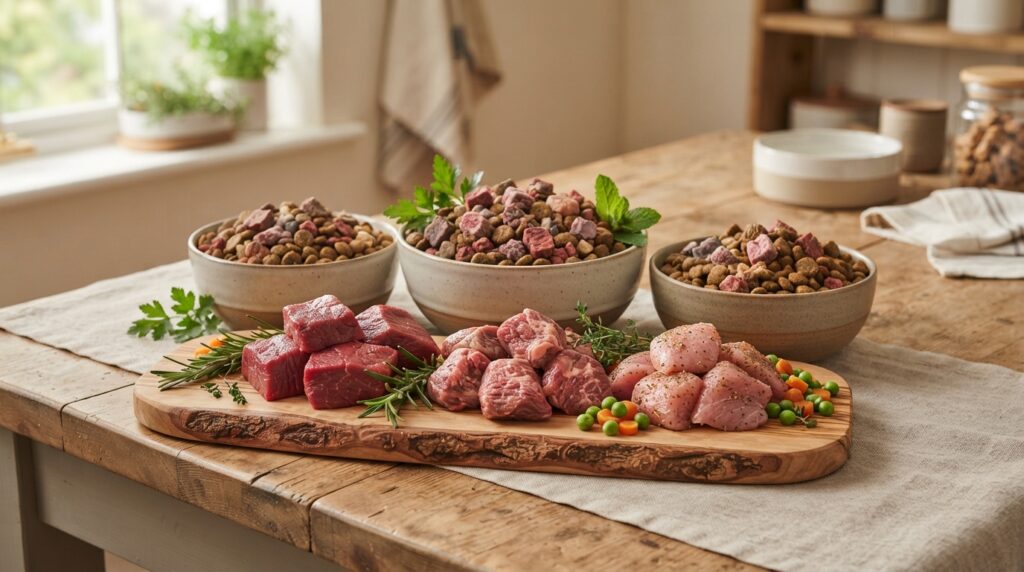
Match a richer meat to the dog’s energy needs rather than choosing it simply because it sounds more nourishing.
When Are Fish and Eggs Useful Protein Choices?
Fish stands out when we want an animal protein that also supplies omega-3 fatty acids. Salmon provides DHA, a type of omega-3. Those fats can support skin and coat health as part of a balanced diet.
Whitefish, cod, and other fish provide protein and omega-3 fatty acids. Their nutrient profiles vary, so the food’s full formulation matters. Fish can add protein and fats, but it does not replace a complete diet.
| Protein source | Protein and fat profile | Notable nutrient | Practical role |
|---|---|---|---|
| Salmon | High-protein fish | Omega-3, including DHA | Skin and coat support |
| Whitefish or cod | High-protein, relatively low-fat fish | Omega-3 | Lean fish option |
| Cooked egg | Complete, digestible protein | Essential amino acids | Food ingredient, not a diet by itself |
Eggs provide complete, digestible protein and essential amino acids. A cooked egg can be an ingredient in a dog’s food, but one ingredient cannot supply every nutrient a dog needs.
Raw eggs carry risks that matter when we prepare food at home. We cover those risks in the home-feeding section. Cooking an egg also makes it easier to serve without adding seasonings or other ingredients.
Use fish or eggs to add variety within an appropriate recipe, not to replace the food’s full nutrient profile. Treat eggs and fish as ingredients within a nutritionally complete meal, not as a substitute for one.
What Do Duck, Venison, and Rabbit Offer?
Duck, venison, and rabbit can broaden a menu, but their usefulness for an individual dog depends on its prior diet. Less common does not mean allergy-proof, and any protein can cause a reaction.
A novel protein means a protein the dog has not eaten before. It does not mean the protein cannot trigger a response. A dog’s past foods, treats, and flavored products all matter when we assess whether a meat is truly new.
Duck and venison as less-common menu options
Duck offers a flavorful option that may appeal to a picky dog. It can be novel for one dog and familiar to another, depending on its food history.
Venison is a leaner red-meat alternative to beef or lamb. Some dog foods use it when a less-common protein may suit a dog’s diet, but the label does not prove it is new to that dog.
Neither duck nor venison is automatically hypoallergenic. A dog that has eaten them before may not be a good candidate for a trial using those proteins.
Rabbit as a lean alternative
Rabbit is a lean, high-protein meat that can expand the options in a dog’s diet. As with any protein, its fit depends on the recipe, the dog’s needs, and prior exposure.

Check the ingredient history before calling any meat novel.
How Do Vets Confirm a Protein Allergy?
Itchy skin or digestive trouble can suggest a food allergy, but a veterinarian needs to rule out other causes first. Food signs are not proof of a protein allergy by themselves.
Other health problems can cause similar skin or digestive signs, so a veterinarian should examine the dog. Suspected food allergies typically involve proteins, but symptoms alone cannot identify the cause. A veterinarian-guided elimination-challenge diet trial is the way to investigate and confirm a suspected food allergy.
Rule out other causes of similar symptoms
During an elimination-challenge diet trial, the dog eats a selected diet while the veterinarian tracks signs. The elimination phase should last at least eight weeks, even if symptoms improve sooner.
The best protein for dogs with allergies is a veterinarian-selected novel protein the dog has not eaten or a hydrolyzed diet. Hydrolyzed proteins are broken into pieces too small for the immune system to recognize, which reduces the likelihood of an allergic reaction.
Depending on food history, a novel-protein plan may use one protein and one carbohydrate the dog has never eaten. Rabbit, venison, or duck may be options only if the dog has not eaten them before.
Keep the elimination and challenge phases strict
The selected diet must be the dog’s only food. The food-only restriction is described as lasting 4-8 weeks, while the elimination phase itself should last at least eight weeks. The veterinarian sets the plan for the individual dog.
Small extras can make the trial hard to interpret. Review these items with the veterinarian:
- Treats.
- Supplements.
- Rawhide.
- Flavored oral products or medications.
Reintroducing the previous diet and watching for a flare is the challenge phase. A flare after reintroduction helps confirm a suspected food allergy.
For help planning care costs, compare dog insurance coverage options, since policies differ in waiting periods, limits, and exclusions. Cat owners can also review cat insurance plans and exclusions for eligible care.
Ask the veterinarian how to handle every treat, supplement, toothpaste, and oral medication during the trial.
How Can You Read Protein and Calorie Numbers?
Two foods with different moisture levels can show misleadingly different protein percentages on the label. Dry-matter basis means the nutrient percentage after removing moisture.
To compare protein on a dry-matter basis, use this formula: as-fed protein percentage × 100 ÷ (100 minus moisture percentage). Moisture must be included when we compare foods with different textures.
Compare protein on a dry-matter basis
A food with 30% protein and 2% moisture has 30.61% protein on a dry-matter basis. The calculation is 30 × 100 ÷ (100 − 2).
A food with 25% protein and 30% moisture has 35.71% protein on a dry-matter basis. The calculation is 25 × 100 ÷ (100 − 30). Its lower as-fed number does not mean it has less protein after moisture is removed.
The FDA’s pet food label guidance explains how to compare nutrient levels and read adequacy claims. The as-fed percentage can be useful, but it cannot compare foods with different water content fairly.
Treat calorie estimates as starting points
A dog’s resting energy requirement is estimated as 70 multiplied by body weight in kilograms raised to the ¾ power. For a healthy-weight, 10-kilogram adult neutered dog, the estimate is about 400 Calories a day.
That figure estimates resting needs, not the exact amount every dog should eat. Activity, weight, and body condition affect the feeding amount. Individual energy needs can vary by as much as 50% from calculated values, so we adjust to maintain healthy body condition.
Protein for dogs to gain weight should be part of a veterinarian-guided calorie and nutrition plan, not an unmeasured protein boost. Use body condition and weight trends with veterinary guidance to adjust a calculated feeding estimate.
How Can We Add Protein Safely at Home?
Plain cooked ingredients can add protein, but a kitchen add-in is not a complete homemade diet. A little food from the kitchen should not displace a dog’s balanced food.
Plain cooked, unseasoned chicken or egg can be an occasional ingredient. Homemade protein food for dogs still needs professional formulation to become complete and balanced for the dog’s life stage. Do not treat an add-in as a full meal or a complete recipe.
Choose cooked ingredients, not improvised meals
Adding meat or eggs without planning can change calories and nutrient balance. A dog’s needs depend on its size, health, and current food, so one portion does not fit every dog.
Raw or undercooked meat and raw eggs can carry Salmonella and E. coli that harm pets and people. Raw pet food is more likely than other pet food to carry Salmonella. The risk can affect anyone who handles the food.
Keep raw foods and toxic people foods away
Dogs and cats can carry Salmonella without looking sick and shed the bacteria in feces and saliva. Wash hands with soap and warm water for at least 20 seconds after handling pet food or treats.
Keep these foods and ingredients away from dogs:
- Grapes and raisins, which can cause kidney damage.
- Xylitol, which can cause low blood sugar and liver damage.
- Chocolate, coffee, and caffeine, which can cause severe illness.
- Onion, garlic, and chives, which can harm red blood cells.
- Excessive salt, which can upset body fluids and electrolytes.
- Fatty nuts, which can cause stomach upset or pancreatitis.
Early signs of xylitol poisoning can include vomiting, low energy, and poor coordination. Chocolate and caffeine can cause vomiting, panting, abnormal heart rhythm, tremors, seizures, or death. Severe salt exposure can also lead to tremors or seizures.
Contact a veterinarian or animal poison-control service promptly after a suspected toxic-food exposure.
Can Plant, Insect, and Algae Proteins Be Used in Pet Food?
Plant, insect, and algae ingredients can contribute protein, but the finished food still has to meet the animal’s nutritional needs. The ingredient is only one part of the recipe.
Plant proteins also appear in many pet foods. Properly formulated plant-based diets can support dogs, but an alternative ingredient alone does not make a complete diet or guarantee a food will suit every pet.
Plant and insect ingredients
| Ingredient group | Examples | Potential nutritional feature | Consideration |
|---|---|---|---|
| Plant proteins | Soy, pea, wheat, lentils | Protein and useful food-formulation properties | Formulation must meet the pet’s needs |
| Insects | Black soldier fly larvae, mealworms, crickets | Essential amino acids and 50%-80% protein | Chitin may affect digestibility |
| Algae | Spirulina, seaweed, microalgae | Omega-3 and omega-6, vitamins, minerals | Often an ingredient, not the whole protein base |
| Cell-based | Cultivated animal cells | Animal-derived protein alternative | Use in pet food remains limited |
Insects such as black soldier fly larvae and mealworms contain 50%-80% protein and essential amino acids. Chitin, a part of insect shells, can be hard to digest in larger amounts and may cause digestive discomfort.
Algae and cell-based ingredients
Algae and seaweed can provide protein, amino acids, omega-3 and omega-6 fatty acids, vitamins, minerals, and antioxidants. Cell-cultured meat comes from animal cells grown through in-vitro cultivation, and its use in pet food remains limited.
Interest in sustainability does not establish nutritional suitability by itself. Check the complete food for:
- Adequacy for the pet’s life stage.
- A complete nutrient profile.
- Digestibility and tolerance.
Alternative proteins can be useful ingredients, but only a complete food can show whether the full nutrient mix meets a pet’s needs.
Judge an alternative by the complete food’s formulation and the pet’s response, not by the novelty of its protein.
Conclusion
A suitable protein is the one that fits the pet’s health, history, and complete diet. The best choice is a tolerated protein inside food that meets the animal’s needs for its life stage.
A major food change can affect nutrition, symptoms, and calorie intake. Before changing the diet, review the current food, treats, and any symptoms with the veterinarian. Bring the current food label and treat list to the next veterinary visit.