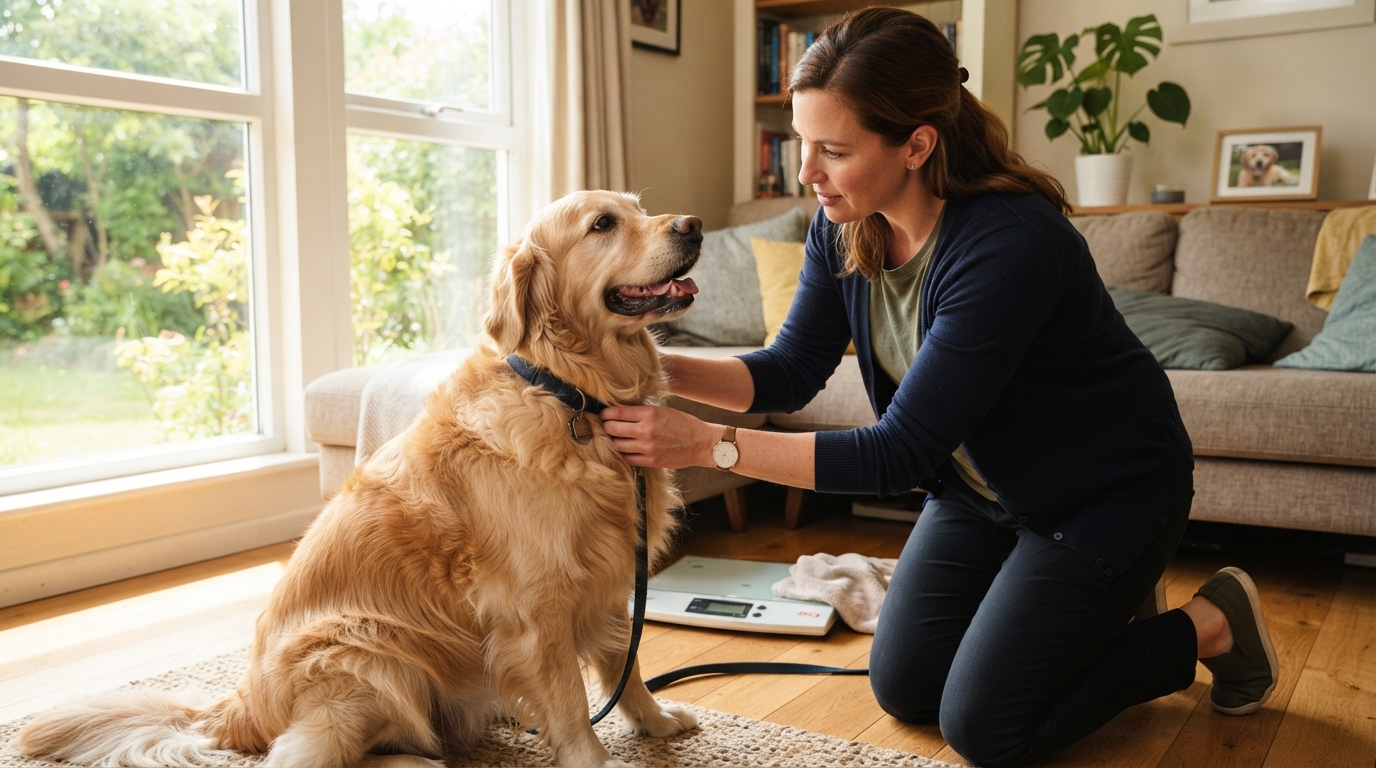
A few extra bites each day and fewer active minutes can quietly change a pet’s body condition over time. Small portions, snacks, and shifts in activity may seem minor, yet their effects can build across months. Healthy habits work best when they fit the pet’s needs and the household’s daily routine.
We can make sure gradual changes do not go unnoticed by paying attention to everyday patterns. A veterinary team can help tailor food and activity choices to each pet’s age, health, and lifestyle.
Key Takeaways
- Notice gradual changes in body condition.
- Fit food and activity to the individual pet.
- Count snacks as part of the daily routine.
- Seek a veterinary team’s help with a tailored plan.
A regular, nonjudgmental conversation with the veterinary team makes early adjustments easier.
How Do We Approach Obesity Prevention in Domestic Pets?
We can start by looking for a waist, feeling the ribs gently, and noticing whether the abdomen tucks up behind the chest. A hands-on check can show changes that a scale alone cannot explain.
On a nine-point body condition score, 5 is ideal, and each point above 5 means about 10% excess weight.
What a healthy body condition looks and feels like
Body condition score, or BCS, is a visual and hands-on rating of a pet’s body fat, commonly assessed on a nine-point scale. We should feel the ribs without pressing hard, see a waist from above, and notice an upward tuck behind the chest.
A scale records weight, but it does not show how much of that weight comes from body fat.
Obesity corresponds to about 30% above ideal body weight, or BCS 8 or 9. These signs help us notice a concern even when the scale changes little.
Why early weight patterns matter
Age matters because weight patterns can shift through a dog’s or cat’s life. U.S. veterinary records from 2020-2023 covered 4,933,916 dogs and 1,341,118 cats.
| Life stage | Dog overweight | Dog obese | Cat overweight | Cat obese |
|---|---|---|---|---|
| Adult | 44.5% | 8.4% | 47.2% | 13.9% |
| Mature | 50.1% | 12.6% | 44.8% | 21.7% |
| Senior | 46.4% | 11.3% | 32.0% | 12.6% |
Overweight or obese body condition affected 26% of young-adult dogs and 40% of young-adult cats. Most affected animals stayed overweight or obese into adulthood.
During growth, the same condition was linked with higher odds in adulthood: 1.85 for dogs and 1.52 for cats. Rates rose in most life stages from 2020-2021 to 2021-2022, then some fell by 2023.
Extra weight can strain joints and is linked with diabetes, breathing problems, and heart disease. A change in body condition is a useful reason to ask the veterinary team for an assessment, even if the scale has barely moved.
How Should We Choose Food, Portions, and Treats?
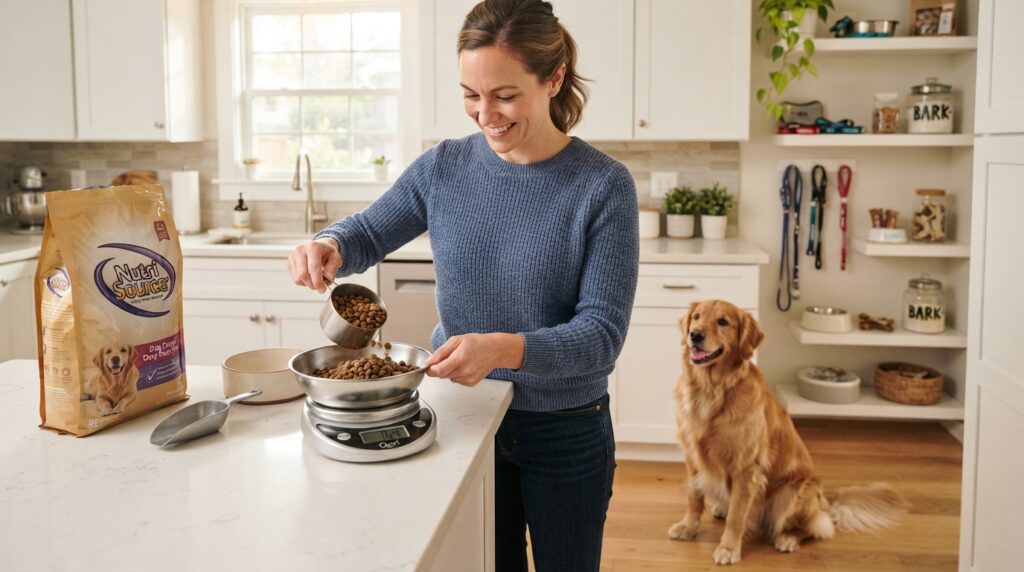
A level measuring cup and a brief feeding record give us a clearer picture than estimating portions by eye. Measured meals help us track the food and calories a pet gets each day.
Feeding directions are a starting point, not an individual prescription. We should compare them with the pet’s age, activity, health, and body condition.
Match food and portions to the individual pet
Use a level measuring cup rather than an overfilled scoop. AAFCO labeling rules require most complete-and-balanced pet foods to show feeding directions and a nutritional adequacy statement for suitable life stages, as set out in its model pet-food regulations.
Simply cutting the current food can also cut essential nutrients. Before changing the food or amount, ask the veterinary team to review the pet’s diet and daily calories. Our dog food label and nutrition guide can help us understand what to check.
We can use this four-step feeding audit to spot gaps in the routine:
- Check the food’s nutritional adequacy statement and life stage.
- Measure each meal level.
- Record snacks, table scraps, and training rewards.
- Have the veterinary team review the total daily plan.
Count every treat and extra bite
Treats count toward daily calories, so they should make up no more than 10% of a pet’s daily calories. We can set aside part of a regular meal for training rewards.
Food puzzles make measured meals more engaging without adding food. Keep the food and treat plan complete and balanced for the pet’s life stage, then ask the veterinary team to adjust it to individual needs.
How Can We Add Activity and Monitor Progress Safely?
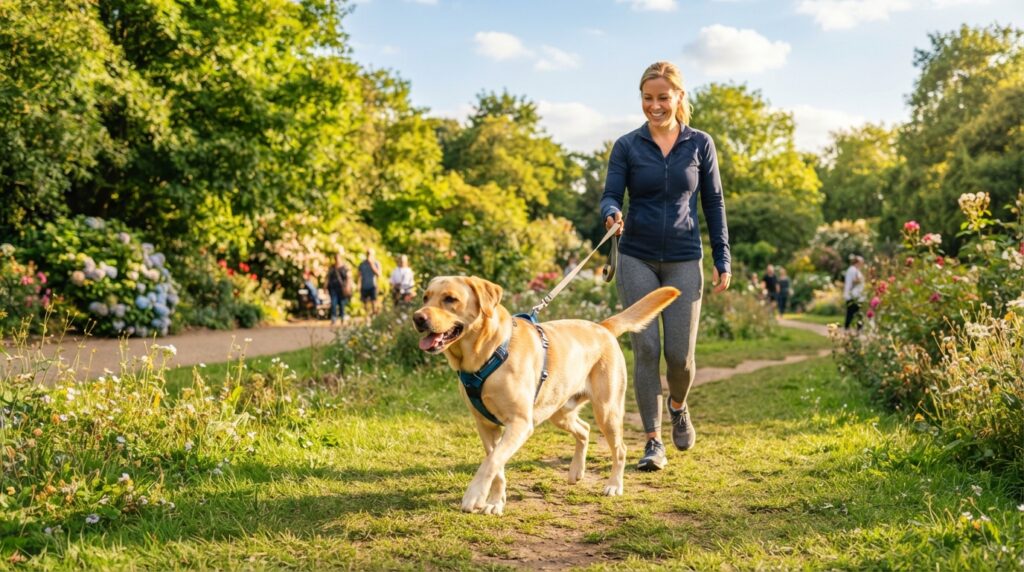
Short, comfortable movement that fits a pet’s current ability is a safer starting point than a sudden jump in exercise. Gradual changes can support weight management while respecting mobility and health.
The veterinary team should assess the pet, approve the feeding plan, and monitor progress. The 2021 AAHA guidelines recommend checking BCS and muscle condition score, ideally at every exam, and tailoring nutrition advice.
Use this safety checklist to guide activity:
- Begin with activity the pet can already manage.
- Increase a dog’s walk by 10% per week only if comfortable.
- Stop if breathing becomes difficult or the dog pants hard.
- Contact the veterinary team about pain, lagging, or reluctance to continue.
The APOP veterinary weight-loss planner is for veterinary professionals. It calls for rechecks every 2-4 weeks and uses three-month steps, with targets recalculated at each step.
In October 2026, an APOP practice survey is collecting prevalence data with consistent body-condition scoring methods. Use the veterinary team’s scheduled rechecks to adjust the plan before a plateau or discomfort becomes a reason to stop.
Conclusion
A healthy weight plan works best when it fits the pet in front of us and the household that cares for them. Prevention depends on steady, pet-specific habits, not blame or one target for every animal.
Weight management can help protect health, but each pet’s needs differ. We can request an appointment to review the pet’s body and muscle condition, along with the feeding routine.
Ask the veterinary team to assess your pet’s body condition and agree on a feeding and activity plan you can follow consistently.